
Once upon a time when I maintained a blog about running I would be posting about how I would have run the latest instalment of the London Marathon, or any other 26.2 mile race in this country or further afield. Times have changed, however, although I did manage to run two marathons last year, partly thanks to injury, my April 2026 is not spent training for my latest attempt to break an arbitrary time goal.
The reason for heading down to London to spectate the TCS London Marathon was to support a friend who was making her race debut, running for charity, hoping just to finish. Going into the event injured, embarking on a run/walk strategy and having not timed herself when out training, we had little idea how long it was going to take her to complete the event, but I guessed at around seven hours.
Canon PowerShot G5 f/4 1/200sec
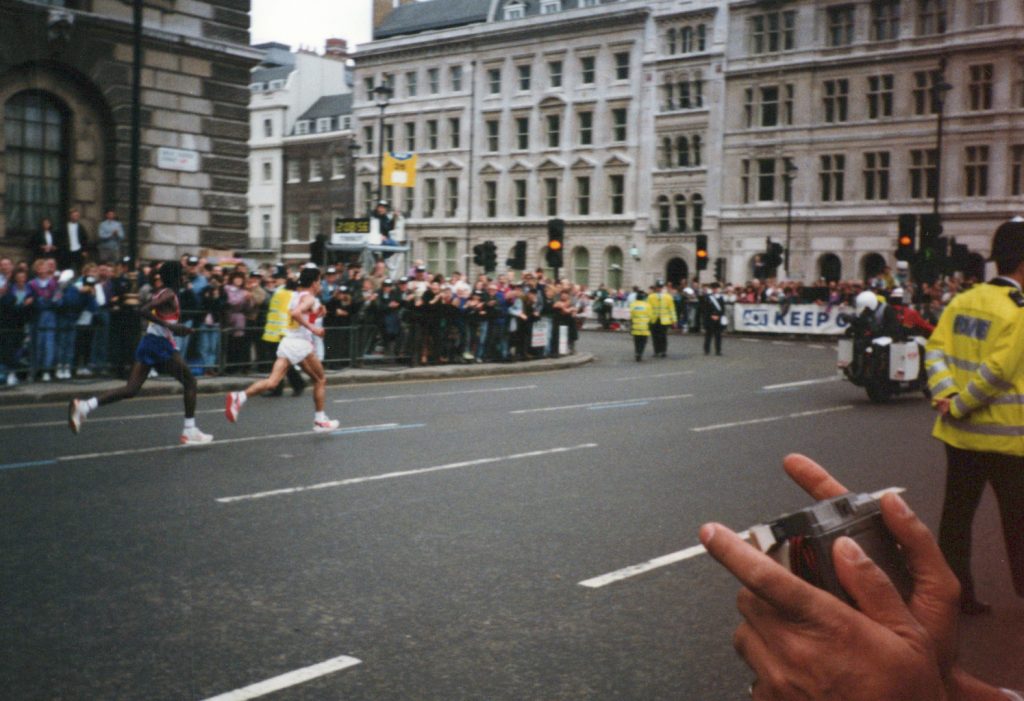
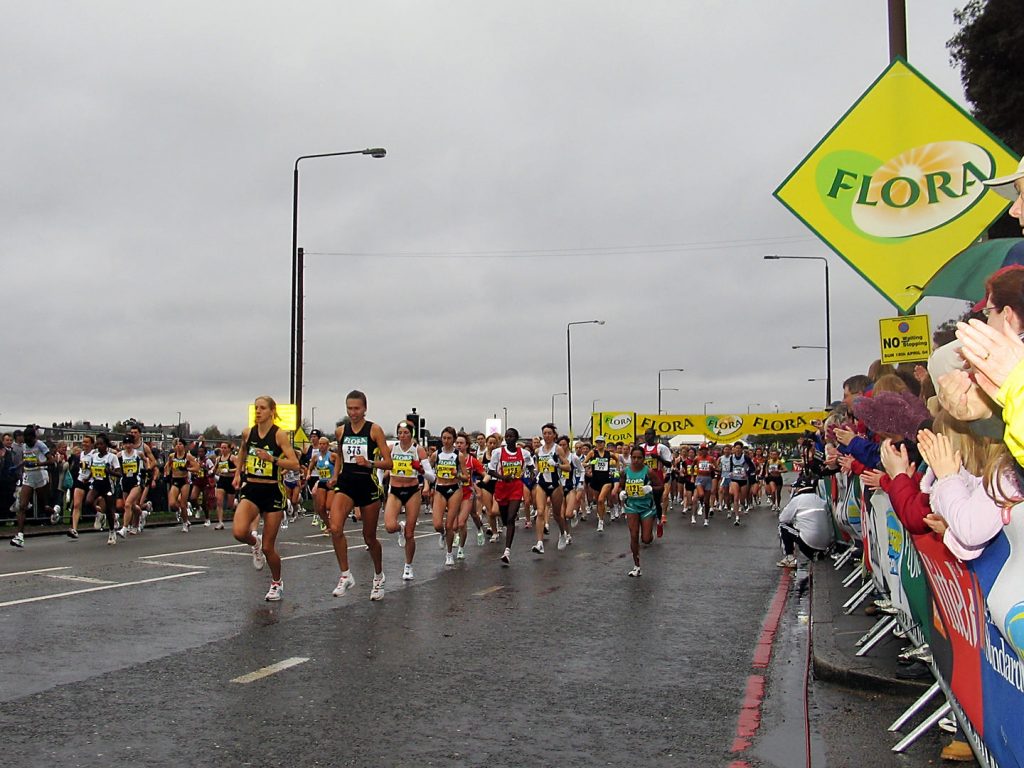
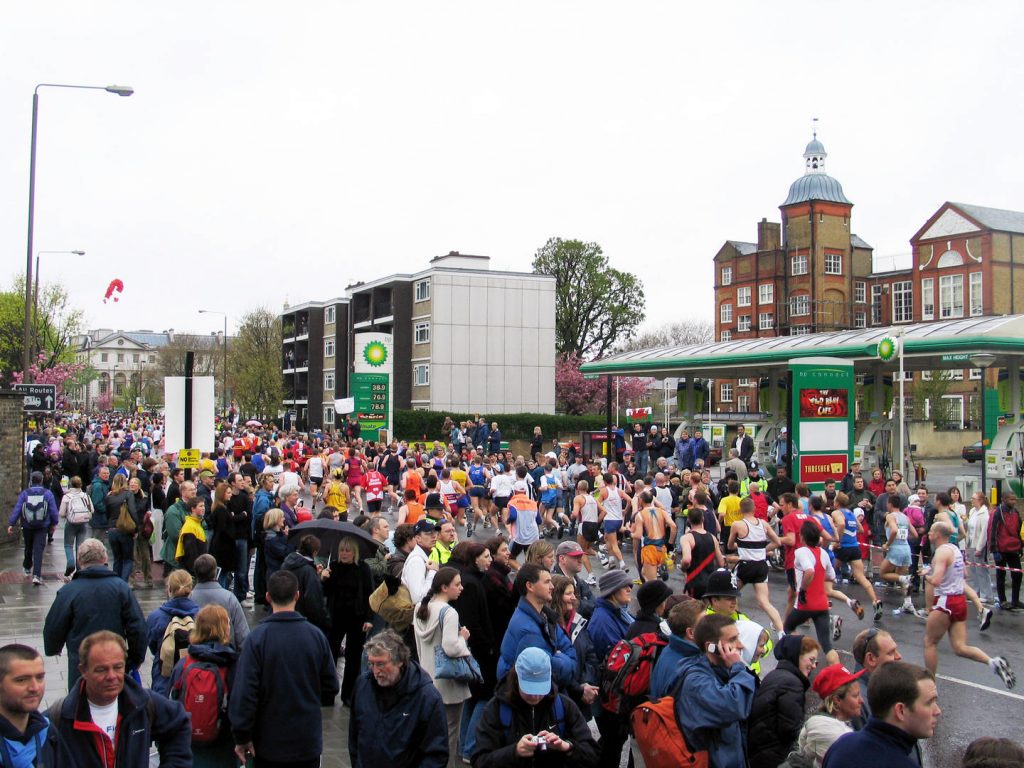
In all honesty I’d much rather be running a marathon rather than spectating it. The last one I had watched as a spectator was London back in 2004 when I had a stress fracture in my shin and my wife was making her first (and last) attempt at the London Marathon. I had my recently acquired Canon Powershot G5 and on a cloudy, wet day, made a day of supporting and taking photos, which at the time I thought weren’t bad, but with 22 years of ageing, have mostly not aged too well – largely due to some interesting use of Photoshop plugin effects, some of which were in vogue at the time (Selective colour), some of which smacked of just because you can, doesn’t meant you should…
Canon PowerShot G5 f/4 1/160sec
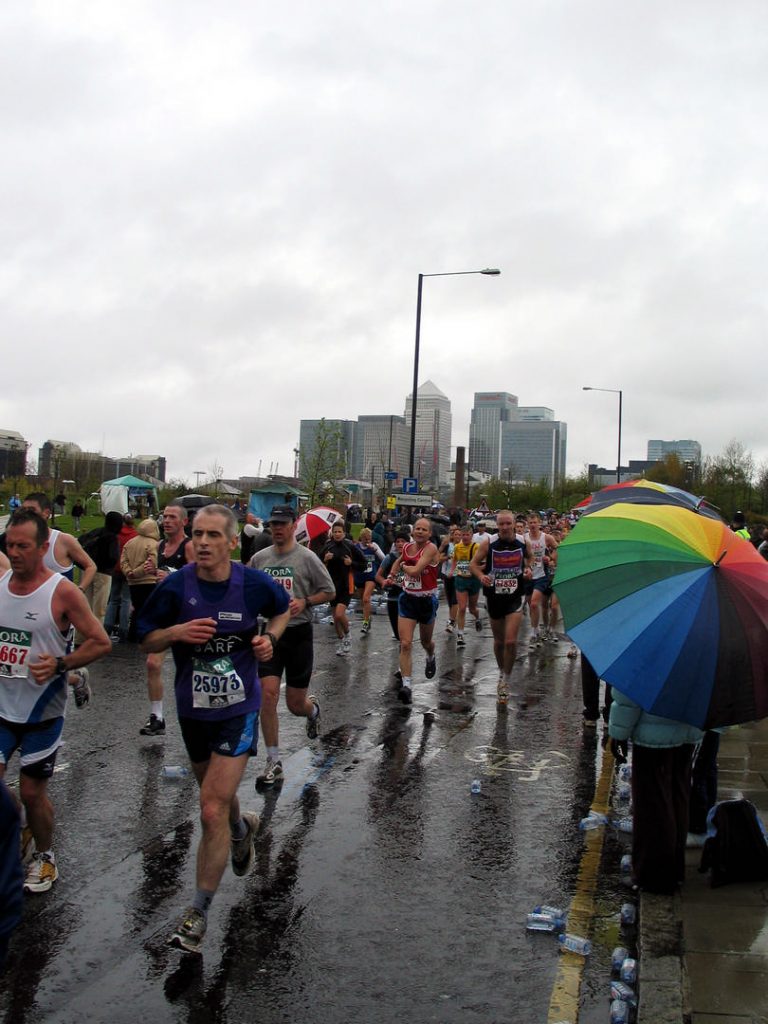
Canon PowerShot G5 f/4 1/640sec
Now with the luxury of many more cameras and lenses to choose from I decided that I was going to make the day a long photoshoot to keep myself entertained. As in 2004, my self-prescribed brief would be firstly to capture my subject runner as often as possible, which meant traversing the course by foot and public transport. Moreover I wanted to try and mostly capture the essence of London that I knew when growing up and visit the sections that for that reason I enjoyed running through over nine or so London Marathons I completed. It could be said to be fortuitous that many of these spots tend not to be the most popular places to spectate, although it should be said that there are nowadays very few places along the route that aren’t densely populated with spectators. I remember my first marathon in particular in 1998 when quite a lot of sections, especially around the Docklands, were almost deathly quiet. Not any more. It is a cacophony of wildly enthusiastic support from beginning to very nearly the end (Ironically it is at the finish as you run past Buckingham Palace that has almost no support save a ticketed grandstand).
In deciding what gear to take I had two plans. If the weather was poor i.e. wet, it would be the weather sealed Panasonic G9 with the equally rain protected 12-60mm lens and the 100-300mm lens, which I would have to swap when possible. If the weather was good I was going to take the Sony 6700 coupled via the LA-EA5 adapter with the A-Mount Sony 70-300mm lens – the crop-factor giving me a 107-459mm full frame equivalent and the AI-tracking giving me the best possible chance of capturing sharp runners rather than blurry messes. I would then also take the diminutive Panasonic GX9 micro 4/3s camera paired with the aforementioned 12-60mm lens. This gave me a full frame equivalent of 24-120mm, which meant a very versatile combined reach of 24-460mm over the two cameras. I am quite used to shooting with two cameras at once. It’s not ideal to be shooting with two different brands, give that the set up and button lay-out is very different, but I was confident I could make it work.
A change to my shooting technique made in the days up to the event, partly to address issues with the overly sensitive shutter button on the Panasonic G9 was to switch all my cameras to back button focus. I’ve used this sporadically over the years – it was how I set up my cameras when I used to shoot the F1 races, but have typically relied on half button shutter button to focus. As I found over the course of the day is that back button focus has two advantages. Firstly it removes the accidental firing of the shutter button when you were trying to focus, which is super easy on the G9 especially. Secondly it gives you a degree of manual focus in the sense that you can use the AF to focus on a zone that you want to be sharp and then fire the camera shutter button without constantly refocusing. This was how many used to shoot fast moving race cars before mirrorless made constant tracking the preferred method, and would turn out to be useful when faced with a swarm of runners heading constantly towards you!
As the big day approached the weather forecast was locked in to it being a rain free day – indeed conditions were nigh on perfect for running and spectating (well for me at least) 16-18C max and sunny with just a gentle breeze. This meant it was going to the two camera approach which meant a new issue. Normally with a two camera set up I have been content to use shoulder straps and one camera over each shoulder. However with the prospect of a long day out in a heaving, bustling environment I was keen to have something more comfortable and more secure. I looked into a number of solutions – full blown harnesses looked interesting but started at around £100 and the best ones were double that. In the end it was a Reddit post on harness recommendations that led me to my purchase of the Nicama camera vest In stock on Amazon for just £25 and with over 1700 mostly positive reviews I decided that I would take a low risk punt.
The vest arrived on the Friday before the marathon and was relatively easy to set up – the hardest bit was realising that the mounts that screw into the 1/4 camera screw holes had a hole that had to be (easily) punched through with the attached screw. As Google had no instances of anyone else having this issue, I put my issues down to stupidity, much to the hilarity of my wife. She came in useful in adjusting the myriad of straps so that the fit around the shoulders, chest and back was snug and symmetrical.
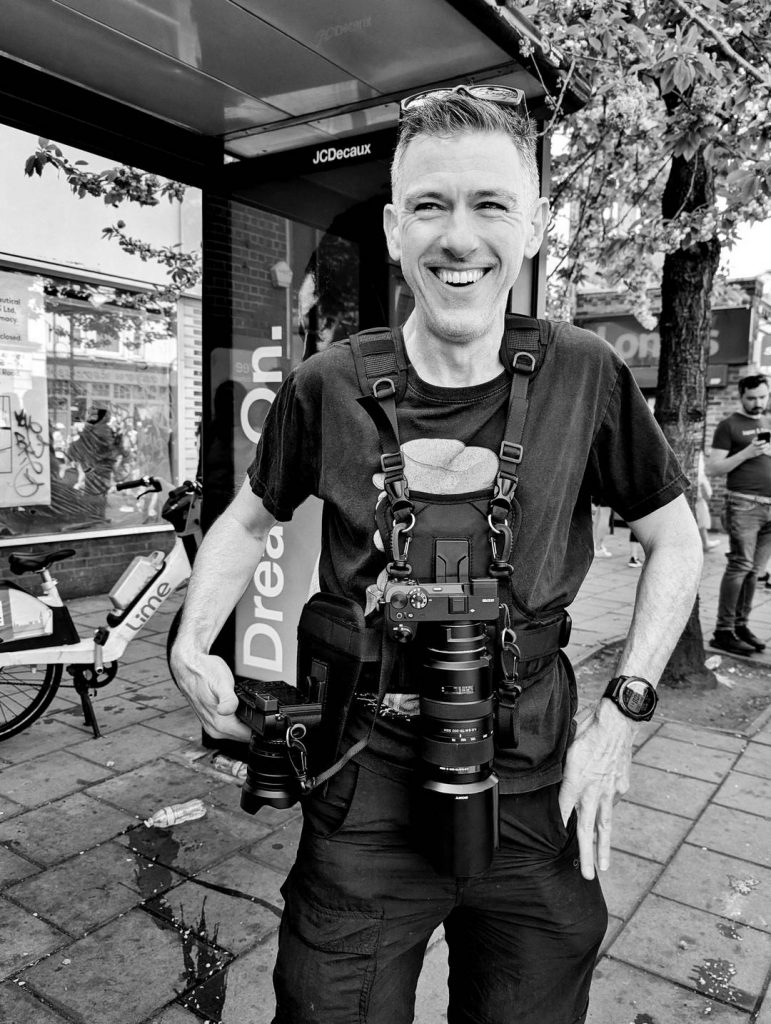
Once I got over the initial urge to pull a sniper pose each and every time I pulled a camera from its holster, it was quickly apparent that this set-up was going to be hugely useful in terms of providing quick access to both cameras combined with a degree of security as both cameras would be strapped to the harness and conversely me at all times, which meant that accidental droppage or deliberate theft attempts would be scuppered.
Final preparations for the day included purchasing two more batteries for the GX9 to go with the two I already had. I’d noticed in previous usage that the life of these batteries is fairly pitiful and worse when the camera is constantly on, which they mostly would be to ensure GPS tagging via the phone app. A major annoyance of mine is that when the camera is turned off, contact with the phone is lost until you reopen the app on the phone – something the Sony cameras do not require – although it should be said the Sony A6700 phone software does frequently decided to randomly stop reporting location to the camera – which is almost as annoying as it doing it constantly.
A battery pack came with us along with chargers for the two cameras. If I recall correctly, the A6700 completely drained two batteries and I had a third which I didn’t much use. The GX9 drained the four batteries I had, then drained a recharged battery and a half in the course of the eight or so hours I was in London photographing. I was quite shocked by how quickly they drained and was relieved I had taken the precautions of purchasing extra batteries and taking the charger!
My wife and I travelled down with two friends to London on the morning of the race, driving from Grantham to Stevenage station as trains from Grantham were prohibitively expensive and sold out (Leeds were playing in the FA Cup Semi Final at Wembley which placed extra strain on an already overly strained East Coast Main Line). Trains from Stevenage into Kings Cross were delayed and very busy – the first to arrive we couldn’t get on, the second was too slow, and it was the third attempt which we were finally able to board. From Kings Cross it was onto London Bridge before taking a final train to Maze Hill.
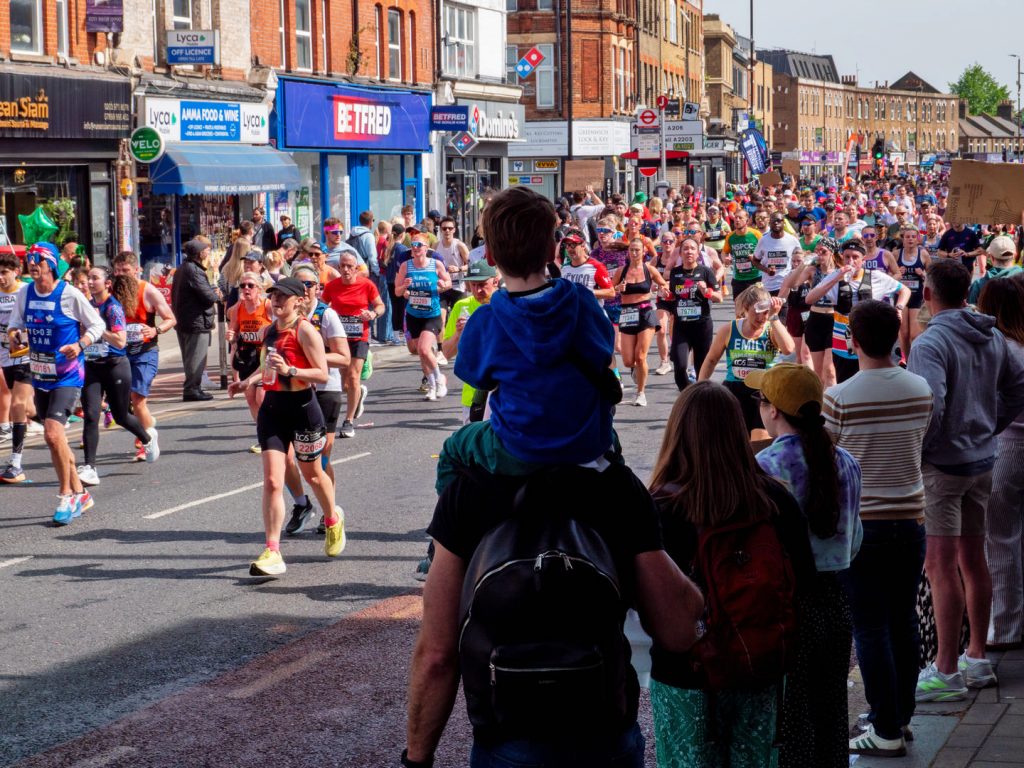
What was immediately apparent – and I had been forewarned by my wife, who had become quite the professional London Marathon spectator when supporting me on my ten or so attempts – is that spectating the race is almost as demanding as running the event itself. It was a lot of fun, but very busy and strategically challenging as we had to change plans on the fly to accommodate for congestion, train delays, station closures and the ETA of our supported runner. Also hydration became a key factor, you didn’t want to die of thirst but at the same time the availability of lack thereof of public toilets meant that any liquid consumed came with consequences. I immediately regretted my mid-morning Americano; it was London Bridge that came to the rescue. Thereafter I made do with one Espresso much later in the afternoon and was prepared to suffer any consequences of dehydration.
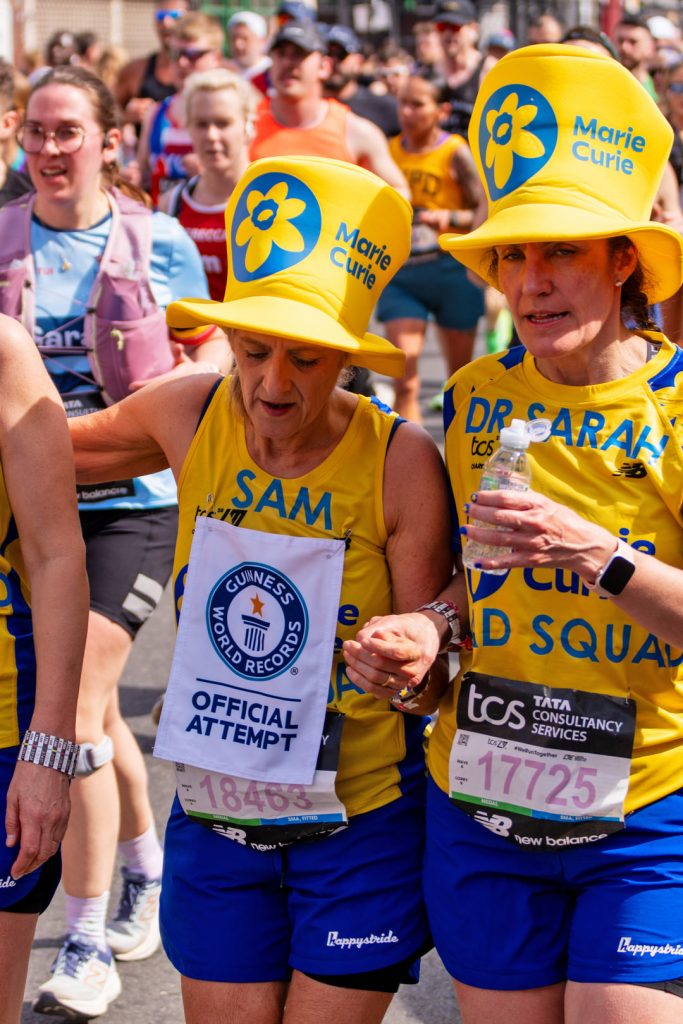
Anyway, back to the matter in hand and photographing the London Marathon. Our tentative plan was very similar to what I had done in 2004 and was hoping that things hadn’t changed much in 22 years. From Maze Hill we were going to walk up the hill to Blackheath – only a 10-15 minute walk – hopefully to catch our supported runner start. As runners now set off in waves, this wasn’t going to be until 11:20am, just as the Elite Women runners were finishing and with the sub-2 alien men about to finish their race. From there we were going to walk back down to Maze Hill to watch at around six miles, shortly before the wildly overly spectated Cutty Sark. Back in 2004 I used the foot tunnel at Greenwich to head under the river to the Docklands at around 17 miles. The plan this time was to head to Canada Water where my wife used to see me pass at around 9 miles, then again at 11. From there we would head to Canary Wharf to hopefully see our runner at around 15 miles, then again at 19 miles, then head onto Westminster to catch her somewhere near the finish and again at the repatriation area on Birdcage Walk.
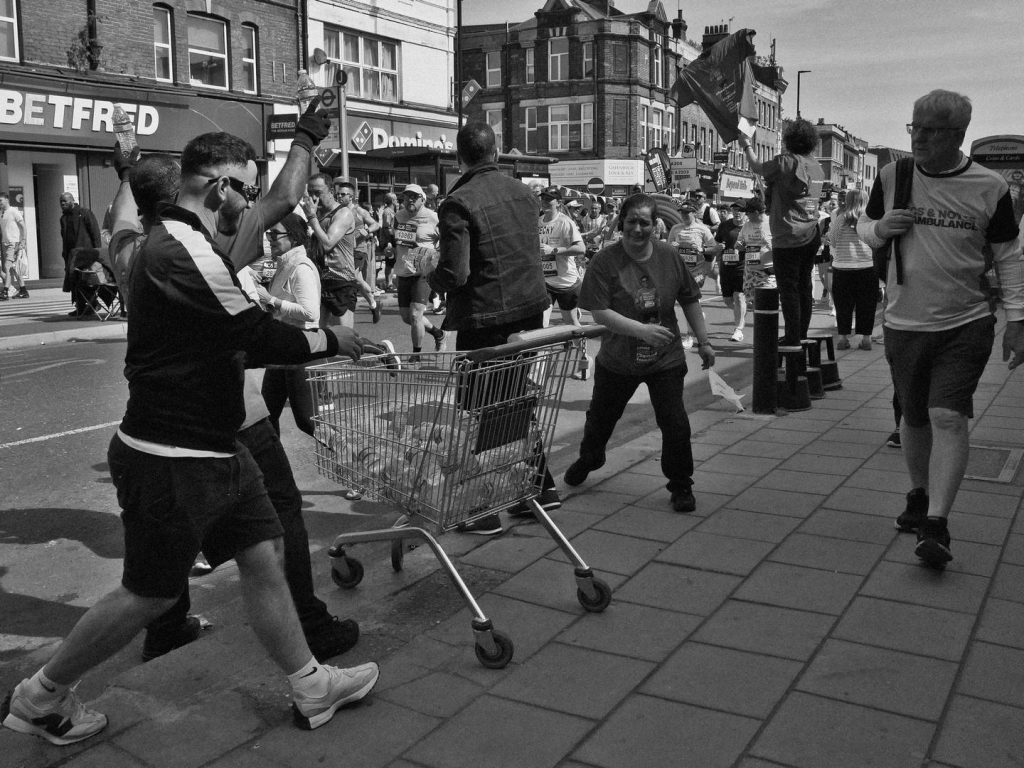
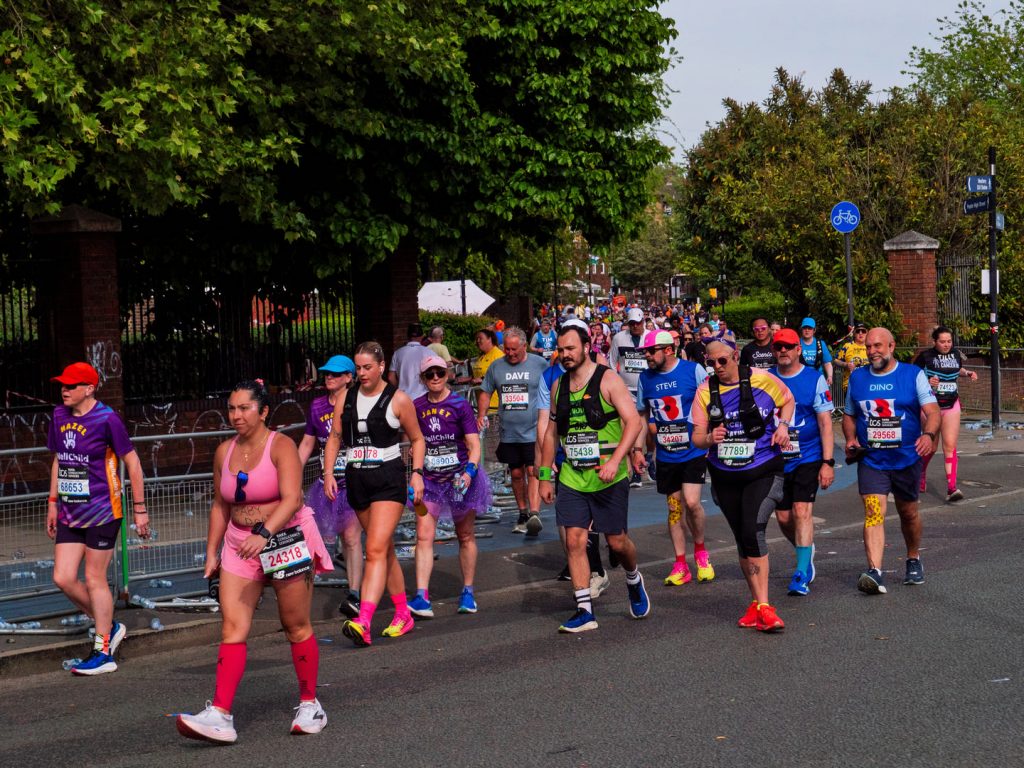
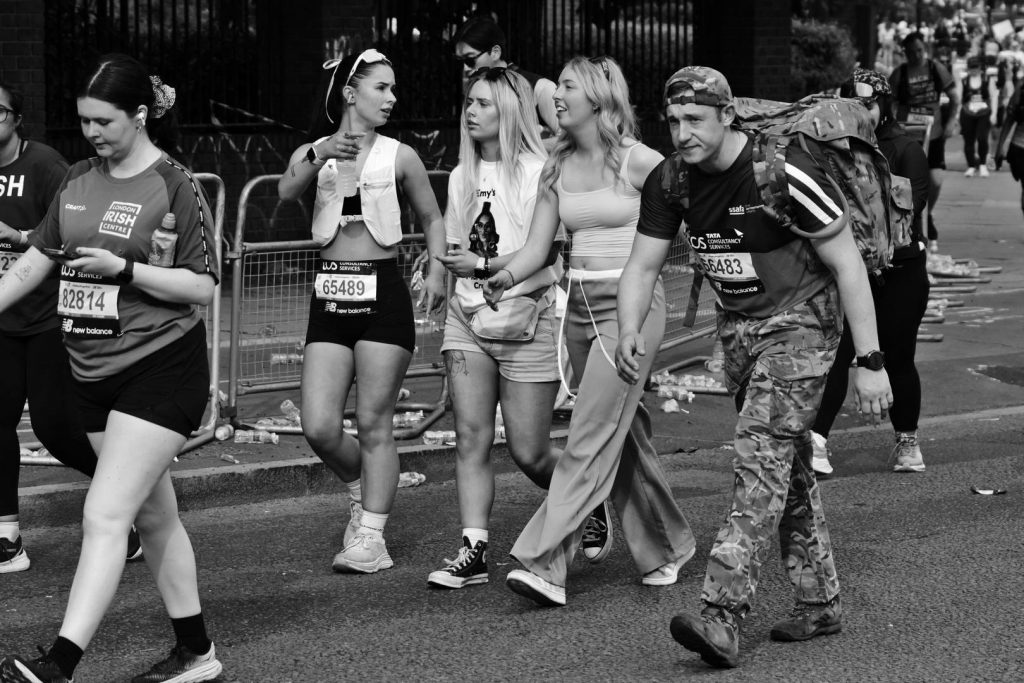
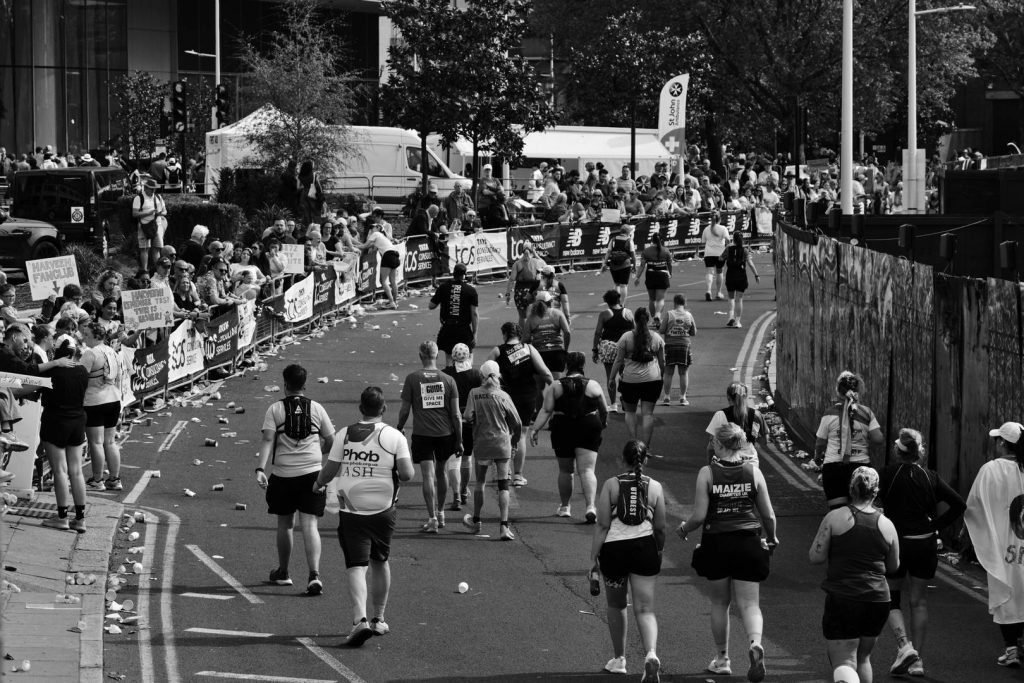
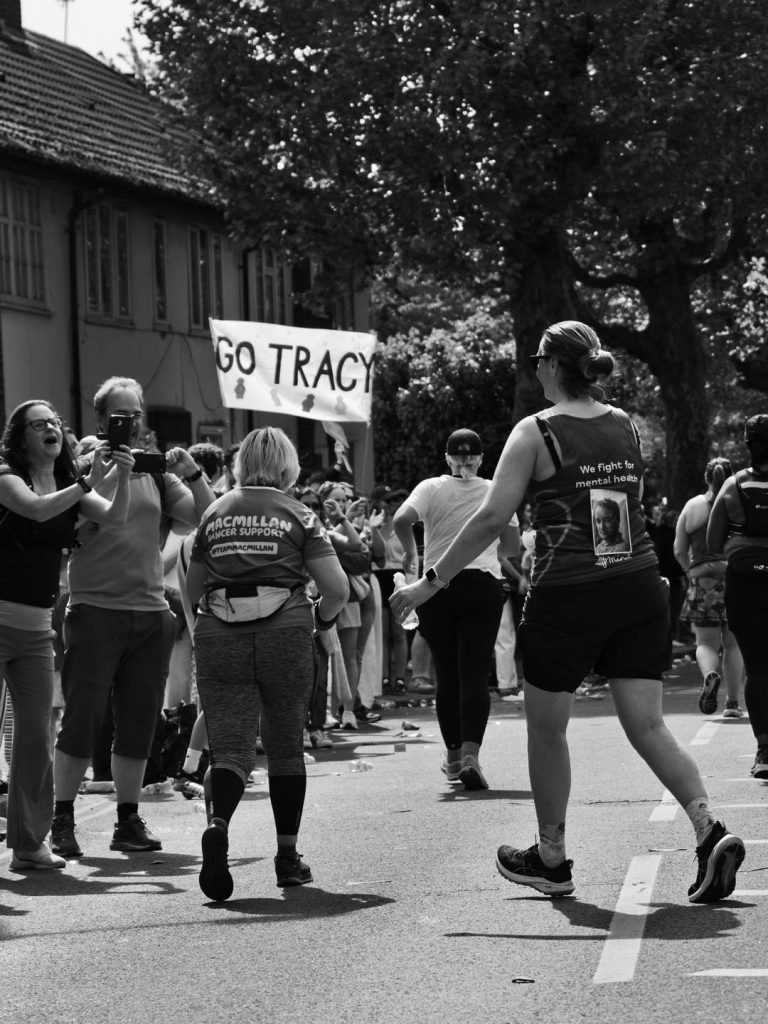
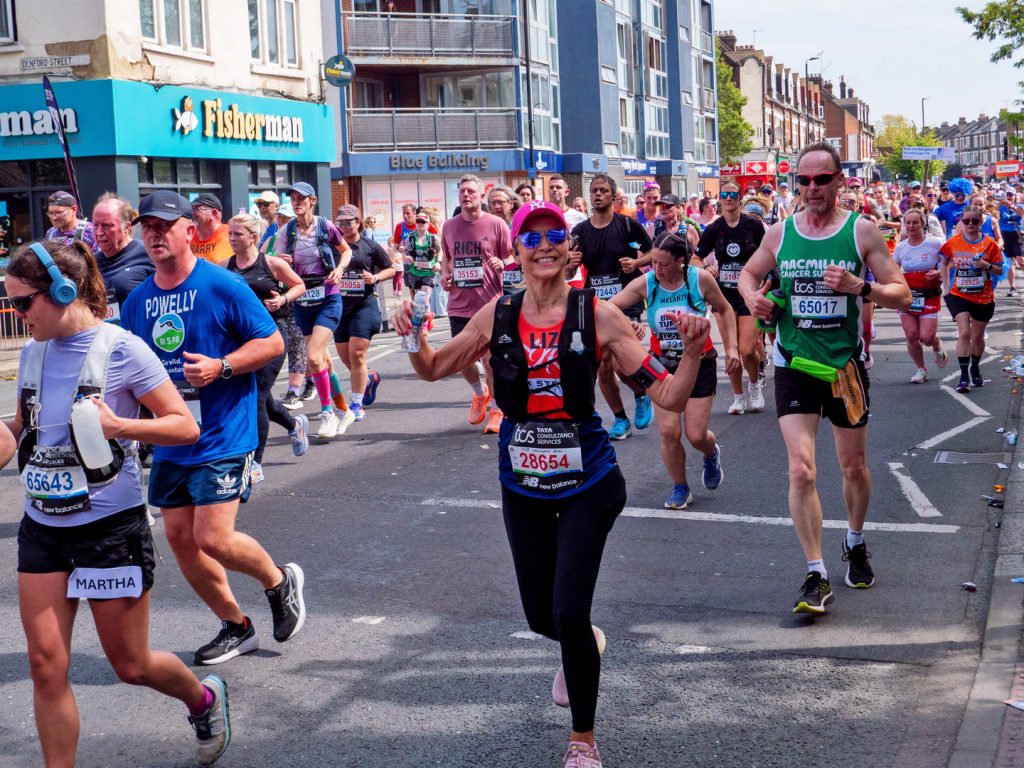
Alas the delayed trains meant we arrived just too late to entertain walking to the start. This meant we had an extended spell at Maze Hill. This turned out to be a blessing as it gave me an extended period to take a lot of photos and fine tune my camera set-up. We lined up on the side of the road, along with 1000s of others, to watch runners who had predicted finishing times of around four hours and slower. Even though the runners set off in waves which all but eliminates the problem of stop-start that plagued all but the quickest runners at London for many years, there was just a constant tide of runners for the eighty or so minutes we spent in the area. With the Sony 70-300mm lens I relied more on the AF tracking, although with so many runners in front of me it was often a case of spray and pray. The Panasonic 12-60mm lens I relied more on setting focus and then shooting without AF, which was possible because that camera was shooting mainly General Views.
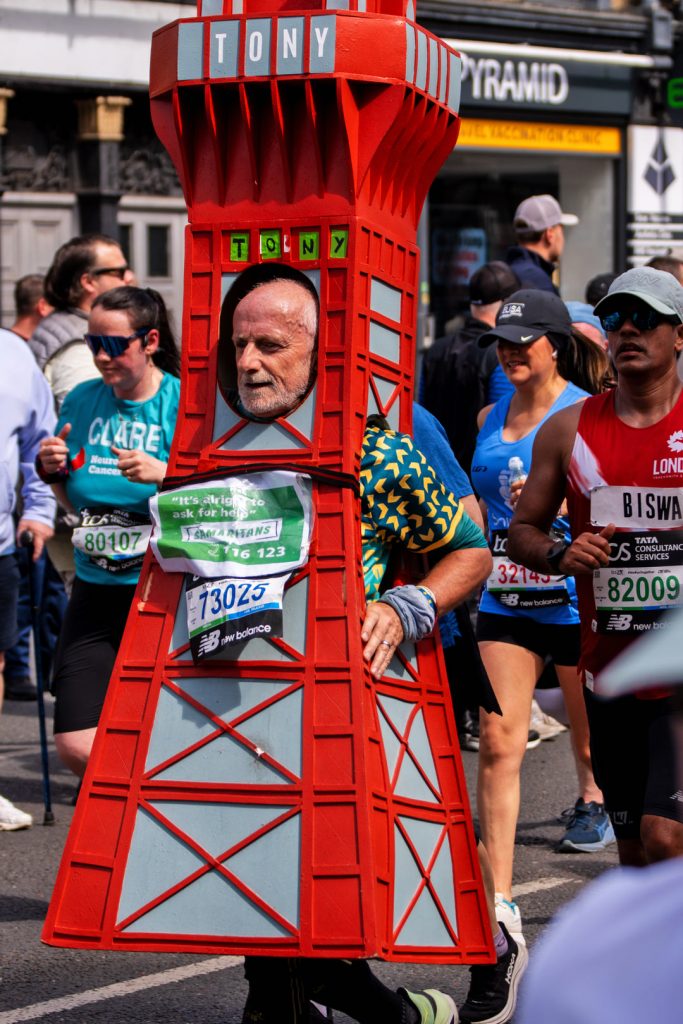
I’d decided to shoot Black and White JPGs plus RAW as I have done all year. I ended up editing all the black and white before editing all the raw, which turned out to be an exhausting process – but the Leica Monochrome D is lovely and the Sony’s isn’t bad either. I did decide to review this for my next photoshoot, as it was an overly drawn out process. More about that in a future post.
The fine tuning of the camera set-up was essentially disabling the touch screen on both cameras. With accidental touching of the screen when walking I had managed to disrupt my regular set-up – the GX9 had turned on the focus magnification screen when I pressed the AF button, which was very annoying and required a lengthy Google search to work out what was causing it and to disable it. The A6700 had something going on with the camera randomly losing its ability to AF. I wasn’t quite sure what was causing this – but the temporary solution was to turn the camera off and on again.
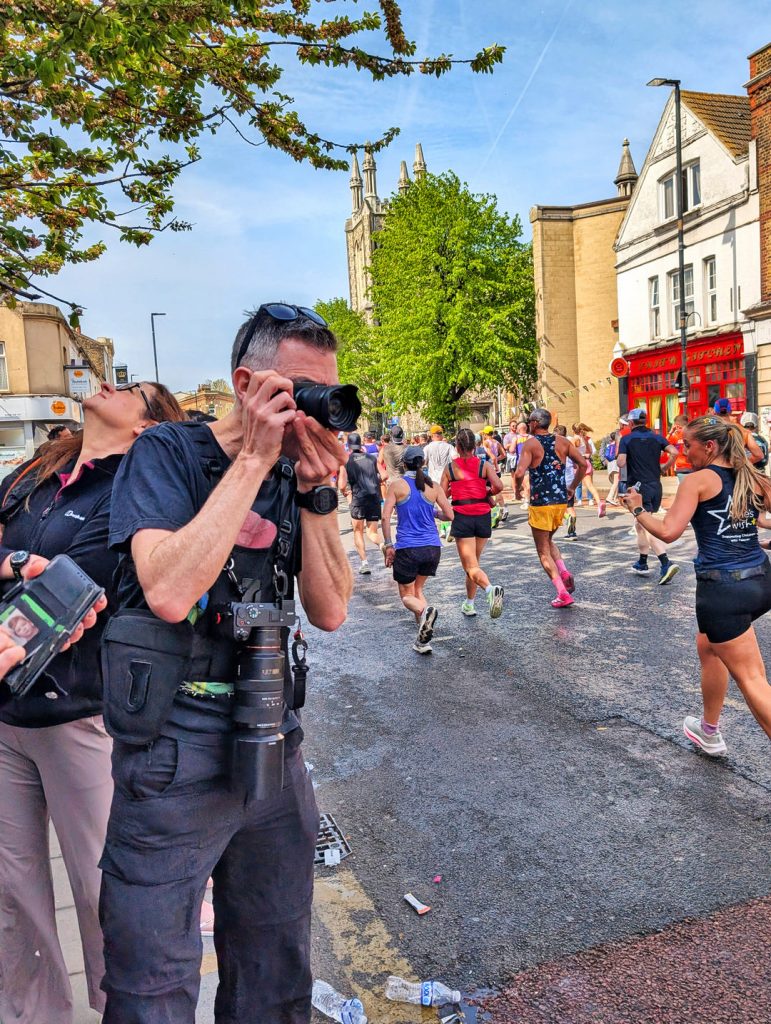
I’m not sure whether it was because I was carrying two cameras, I was wearing a fancy cameras vest, one of my cameras had a long lens, or, as my wife put, ‘You walked around looking like you knew what you were doing’, but my roadside presence was beginning to draw quite a lot of attention. Within a couple of minutes I had a spectator asking if I send some pictures of her spectating partner I had just taken. More often than not an approaching runner would spot me and wave their hands enthusiastically believing they were the subject of my shot. Alas in most instances they were well under the 1.5 meters of the minimum focus distance of my 70-300mm lens so were nothing but a blur to me. Moreover, there is a reason why very rarely will you see an official marathon photographer (the ones who try to sell you their efforts) shooting so early in a race in a big city marathon – it’s impossible to focus on everyone, it’s a case of trying to pick out subjects that may be interesting and hope that they dominate the frame – the hit rate is not huge and would not maximise the profits of the official photographer if they tried to shoot so early on in the race.
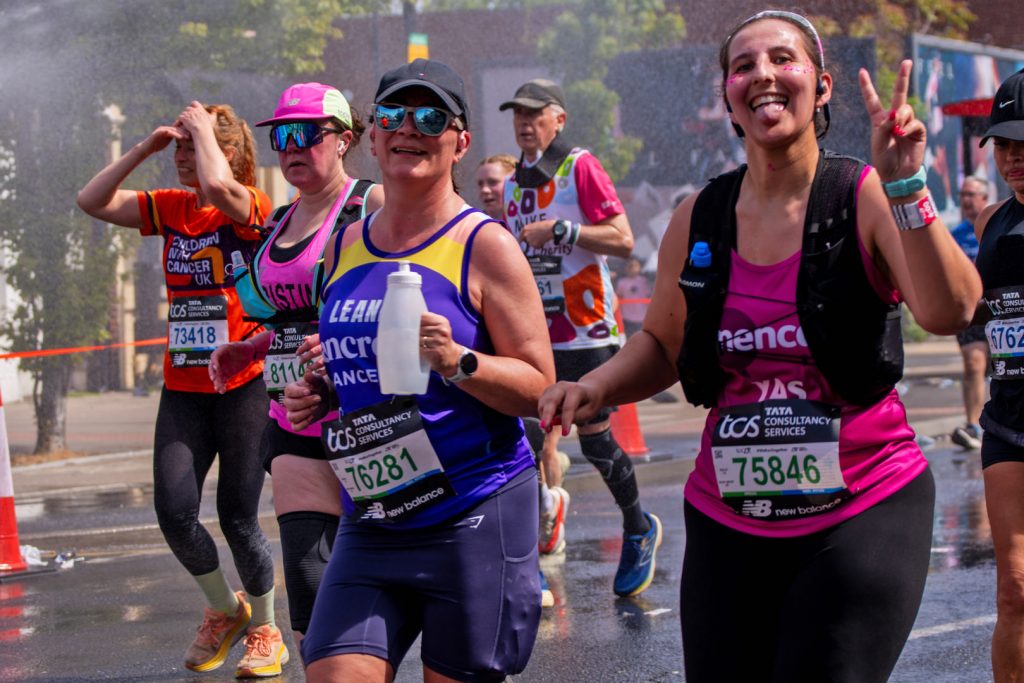
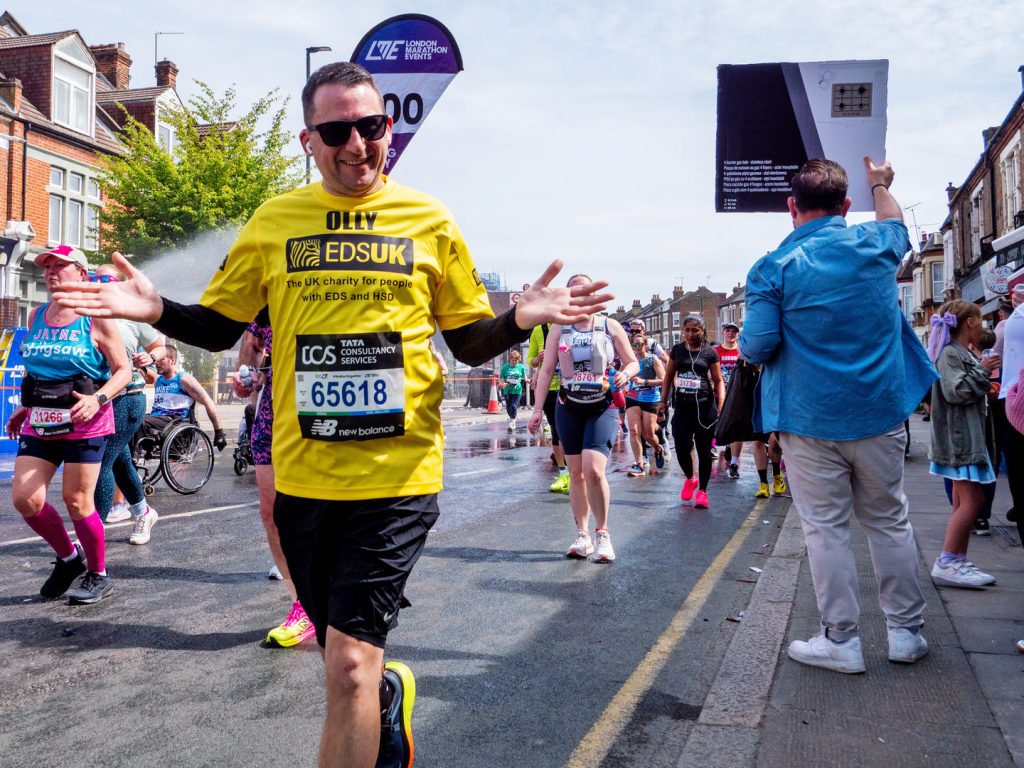
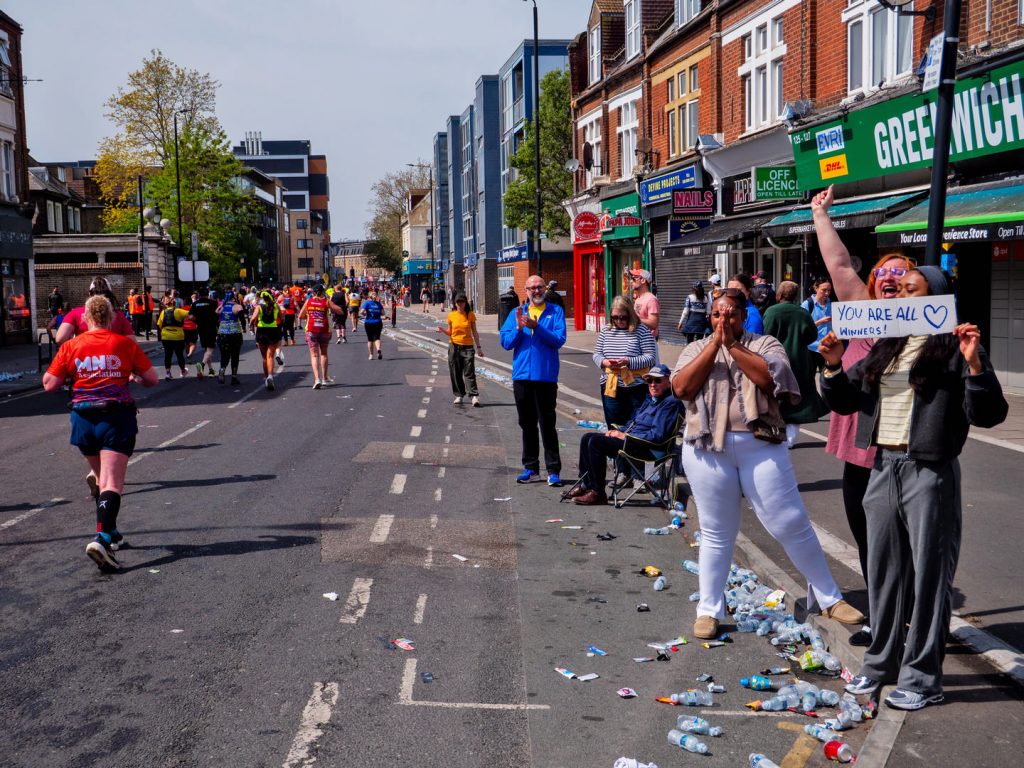
With the participant live tracking beginning to give an indication of when our runner was likely to pass, I had a bit longer to find some interesting shots. This section of the course is one of my favourites, after the relatively quiet opening section as you head down from the start to the Woolwich ferry, then run along the dual carriageway Woolwich Road towards Charlton, the local residents come out in their thousands along the high street to cheer on the runners. They are loud, but not as overwhelmingly loud as the tourist dominated throngs at Cutty Sark just a little distance along.
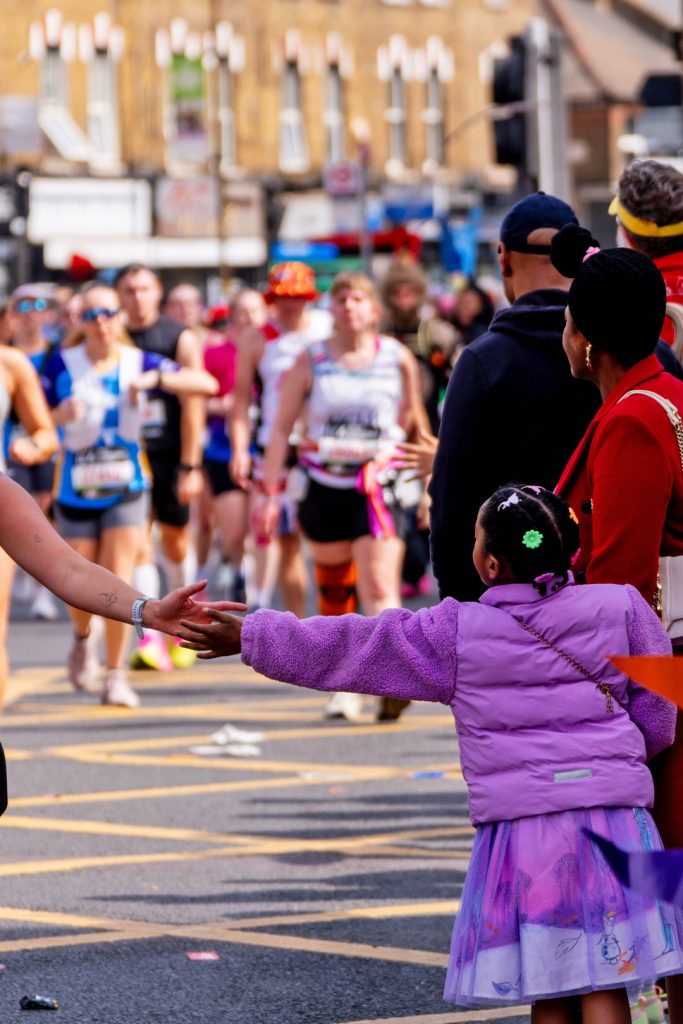
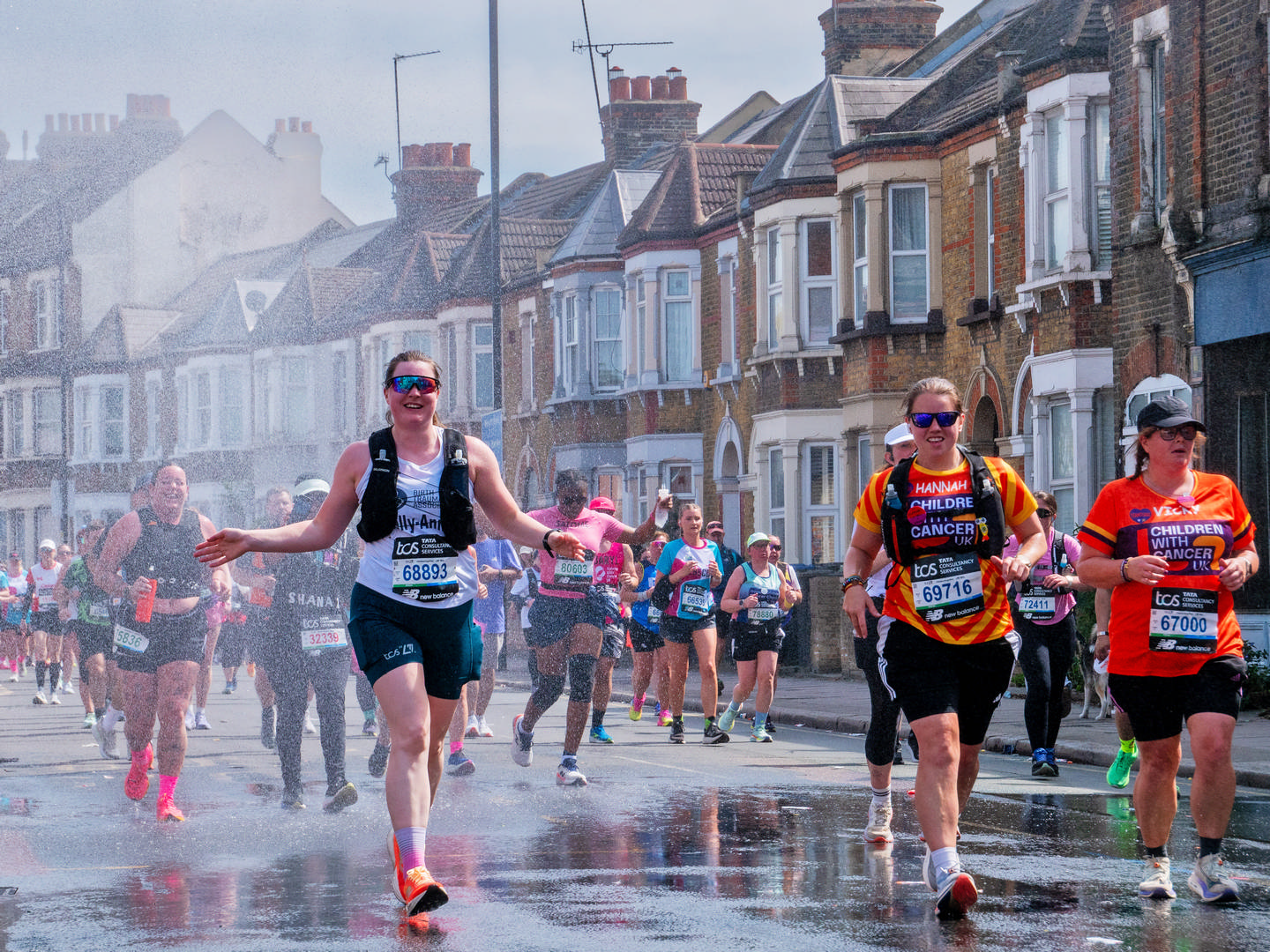
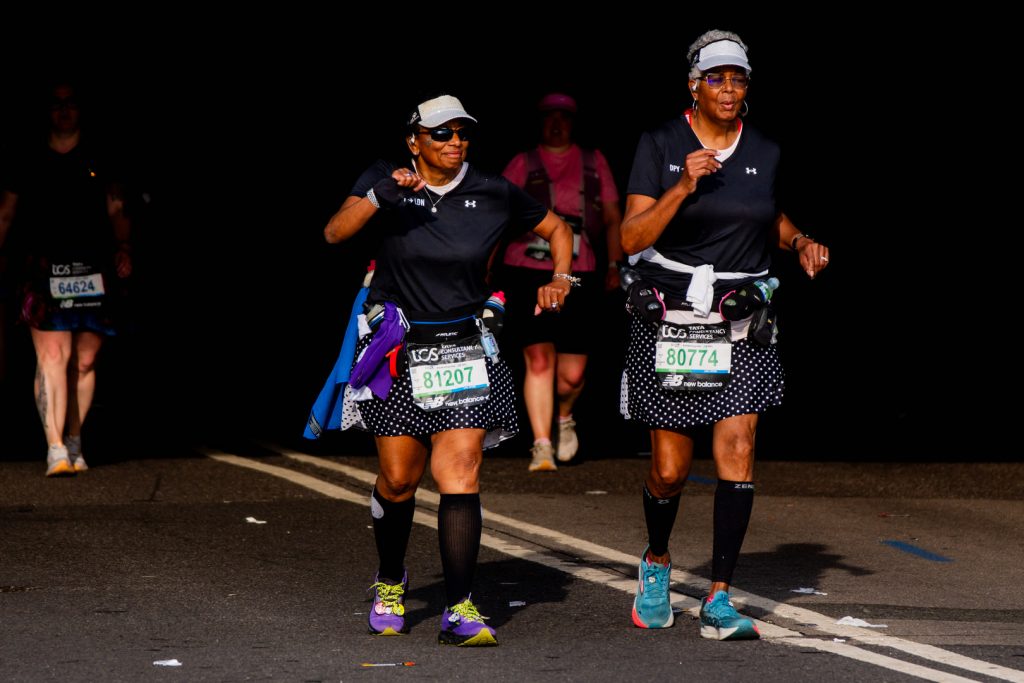
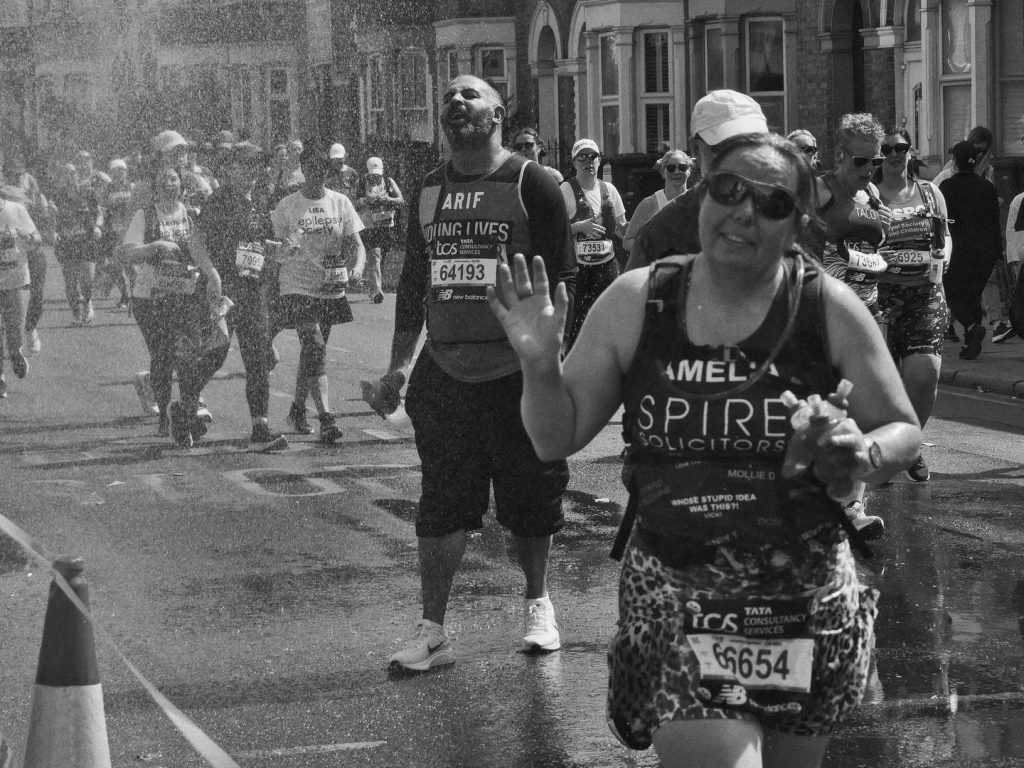
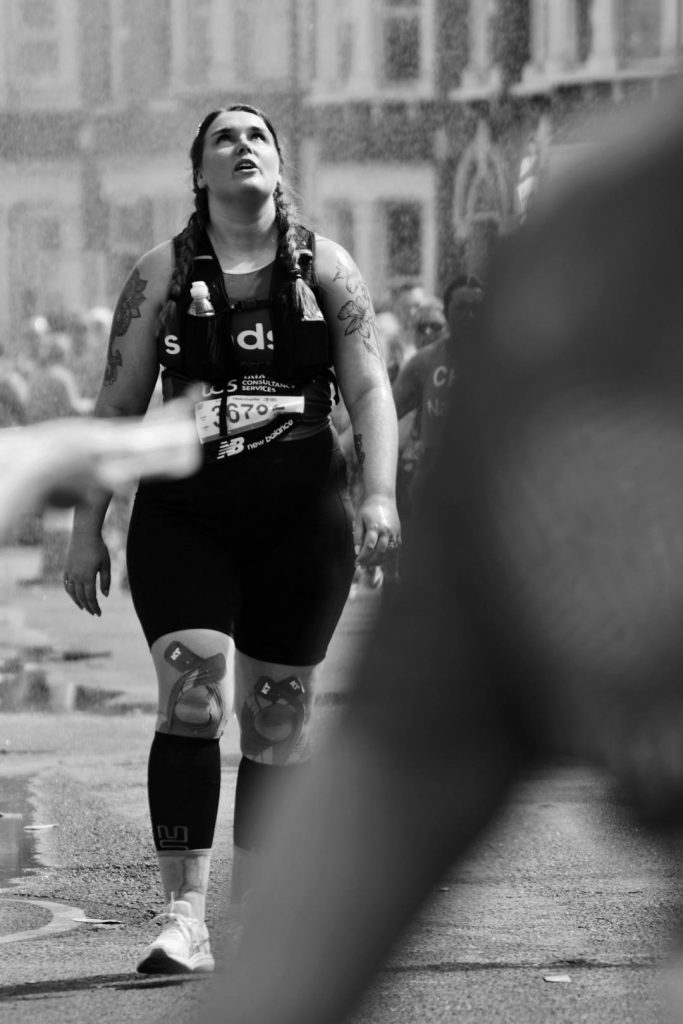
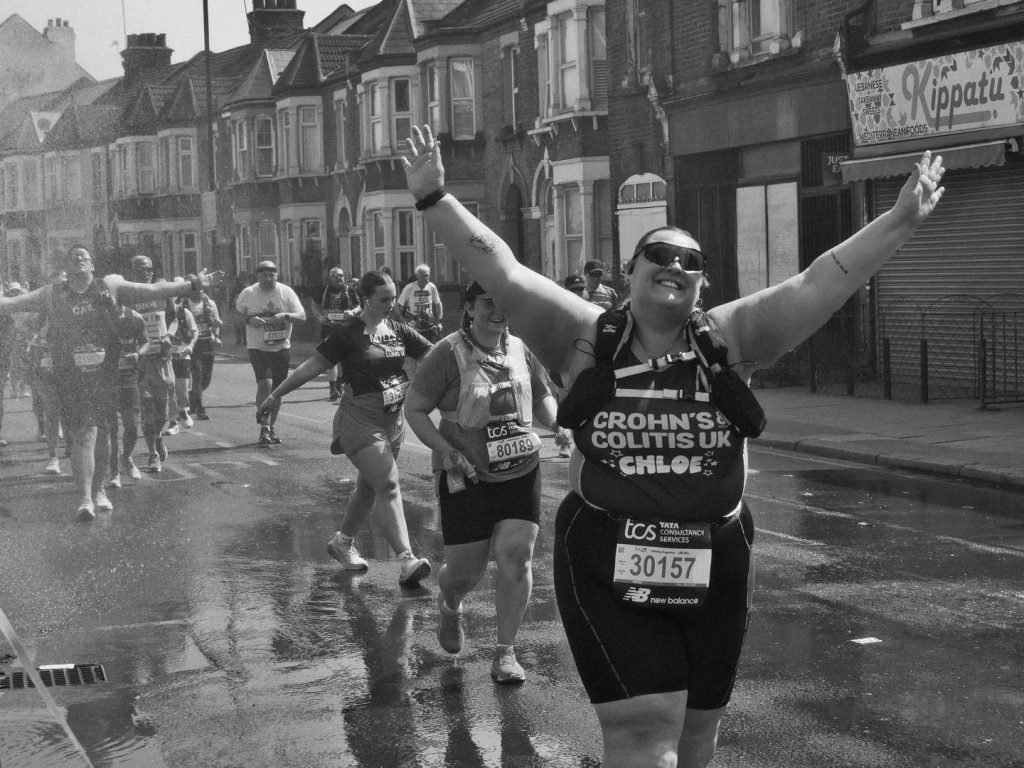
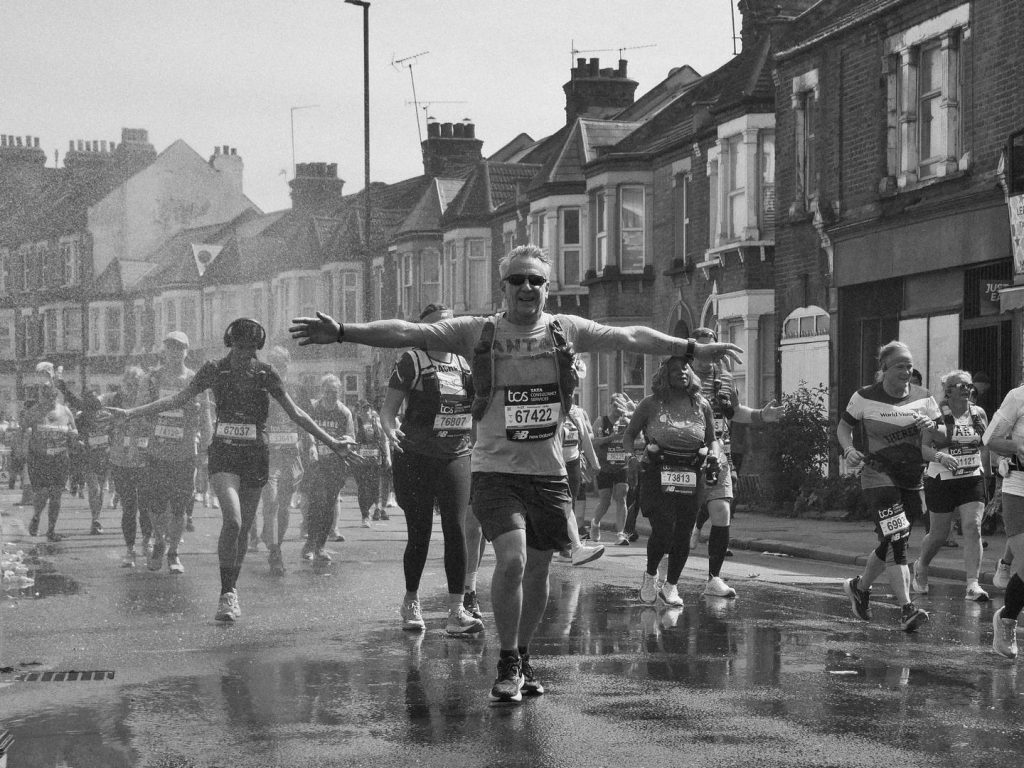
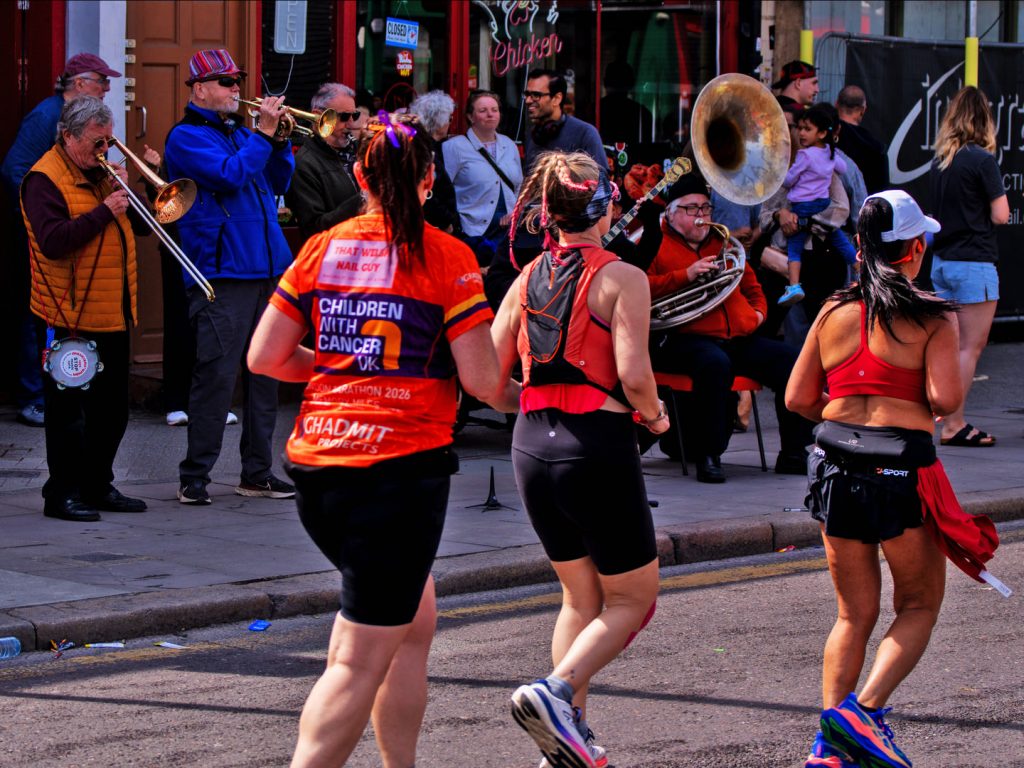
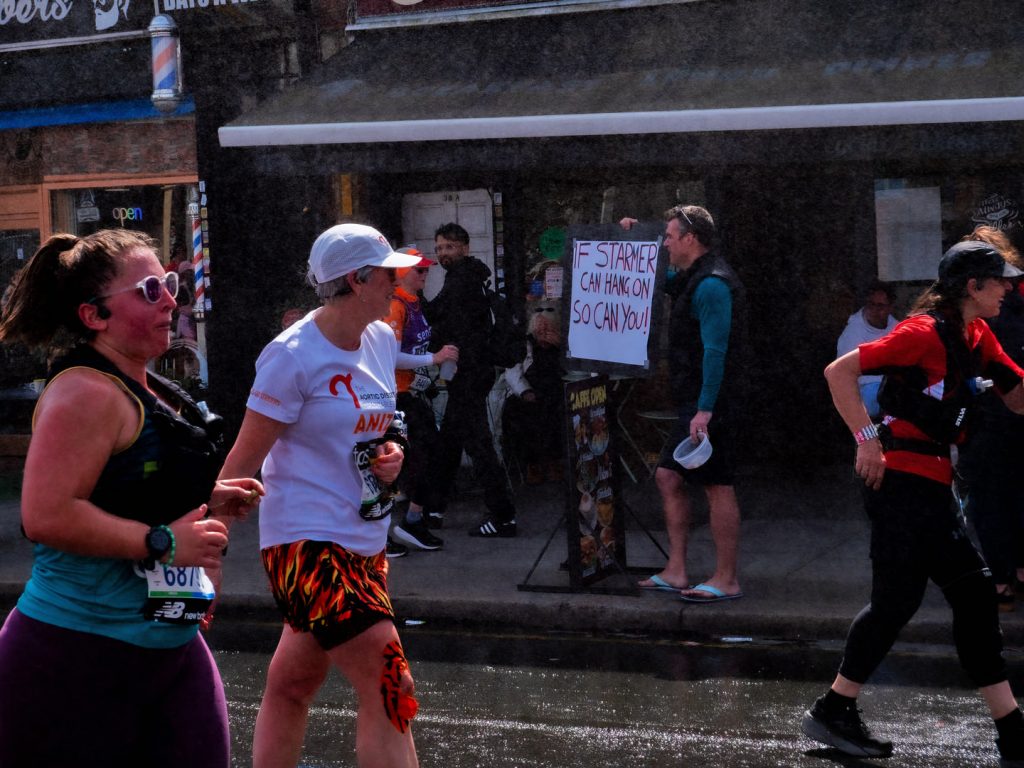
A little further up the high street heading towards Woolwich I spotted an official water spray station – a fine mist of water cooling ever more grateful runners as temperatures rose as midday passed. It was here I was able to capture some of my favourite images of the day with many runners embracing the spray in exuberant manner, all the while cheered along by fans roadside and spurred on by a small brass band.
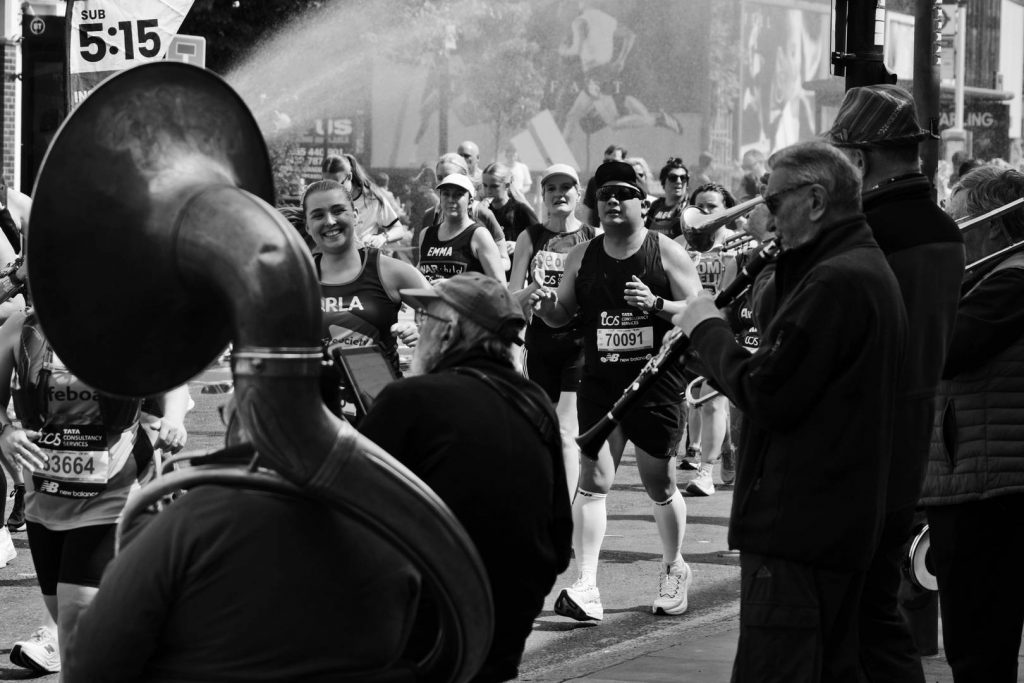
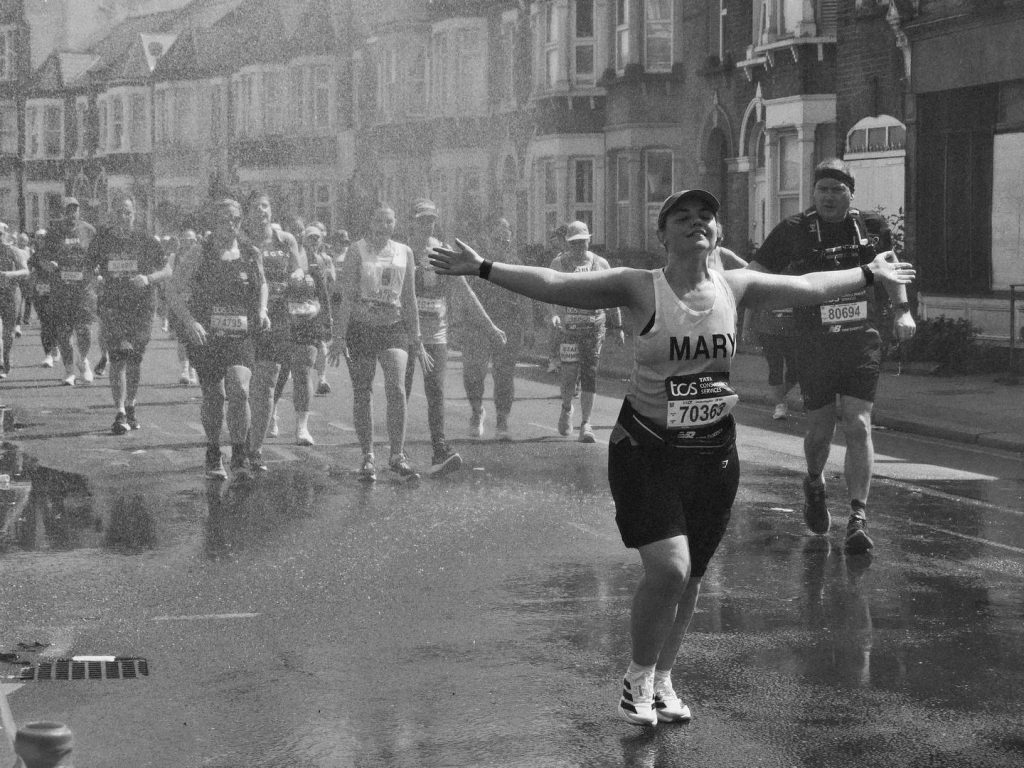
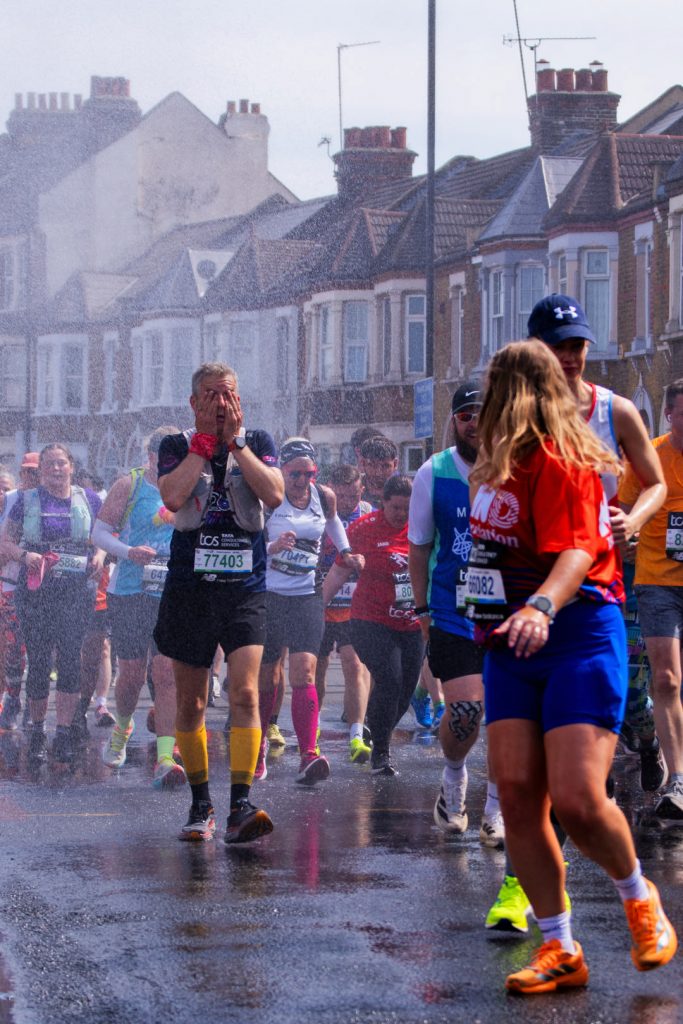
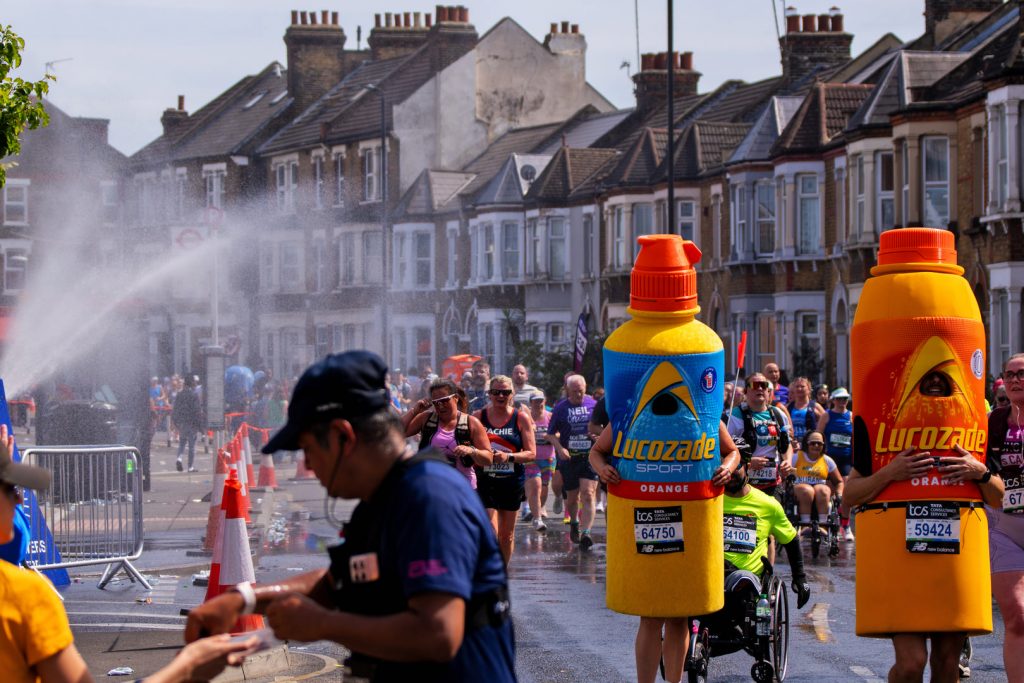
It was here I spotted our runner for the first time. Shouting to get her attention as she was on the other side of the road she saw at me at the last moment and gave me a wave. Luckily the throng of runners was thinning a little and I was able to jog along with the runners to catch her as she stopped to say hello to my wife and our friends. With a quick race update done she was gone and we were off to our next venue – Canada Water.
It was a short walk back to the train station, a ten minute wait for the next train and another ten or so minutes to get back to London Bridge where we were able to down our packed lunch. It was at London Bridge we got the true sense of the sport of marathon watching. The station was packed, mostly with people spectating and heading from one vantage point to the next. The first marathon finishers were already at the station making their way back home, cheered enthusiastically by anyone who got to see their finish medal. By now I was just following my friend who still commutes regularly to London and has a far more intimate knowledge of the public transport system than I do.
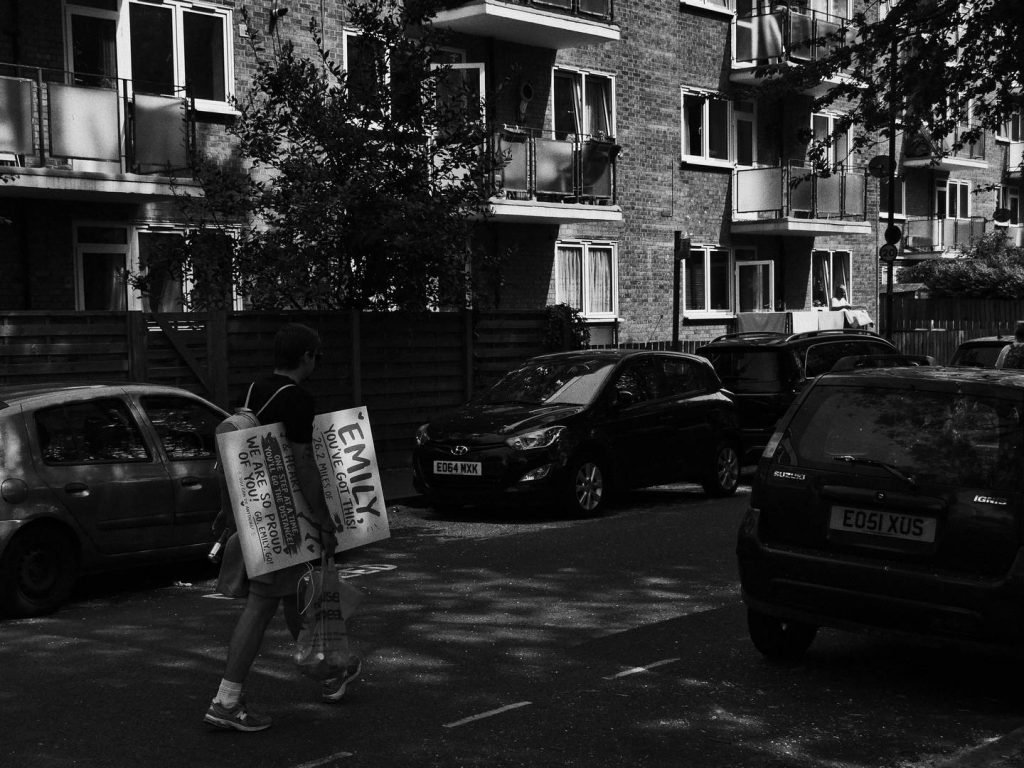
We made it to Canada Water just a little too late to see our runner at nine miles, but with ample time to spare to make it to the eleven mile spot. Another part of the course that when I ran it last in the late 2010s was not too populated with spectators, this is now another section that has become almost overwhelmed with spectators. We were fortunate in a sense though that with our runner enjoying life somewhere near the back of the field, crowds were beginning to thin a little by the time we arrived, although it was still certainly busy and bustling with activity.
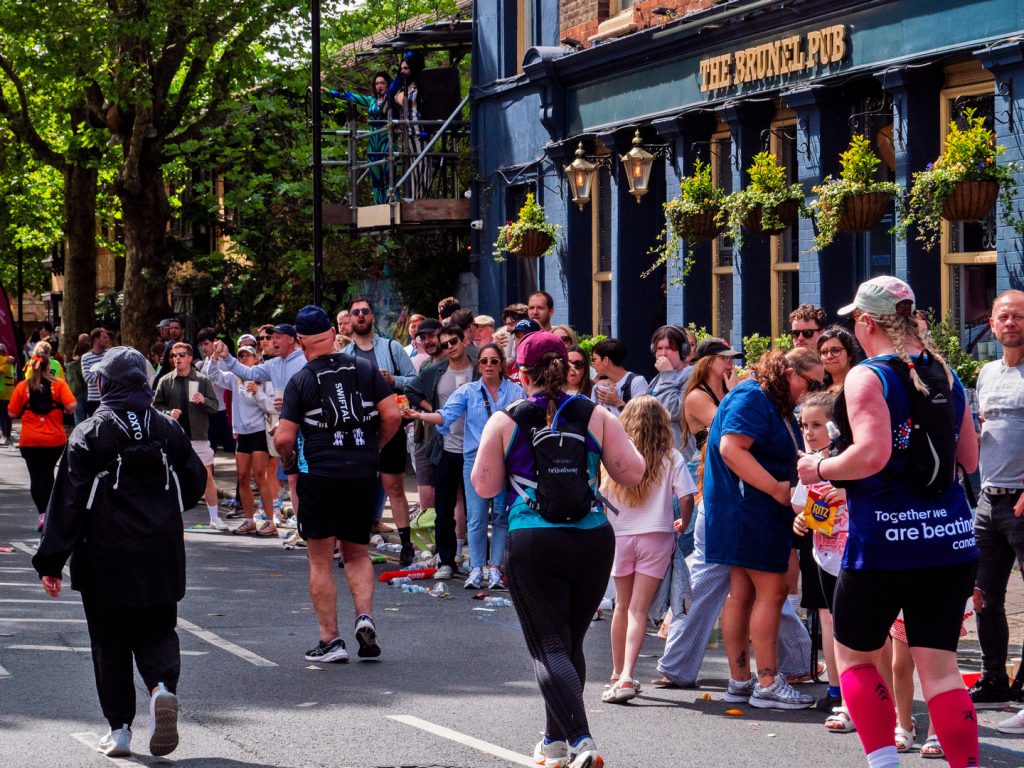
Our next viewing spot was at around eleven miles, opposite The Brunel Pub on Brunel Road, a pub I instantly recalled from my running days for its PA system playing loud music, this time DJ’d by a pair of Drag Queens. I got some nice shots here of the runners, by now many beginning to struggle just a little heading along the residential road being cheered on by the crowds and the pub dwellers. We didn’t have to wait so long for our friend to arrive; she spent a little longer chatting to us this time as weariness began to set in.
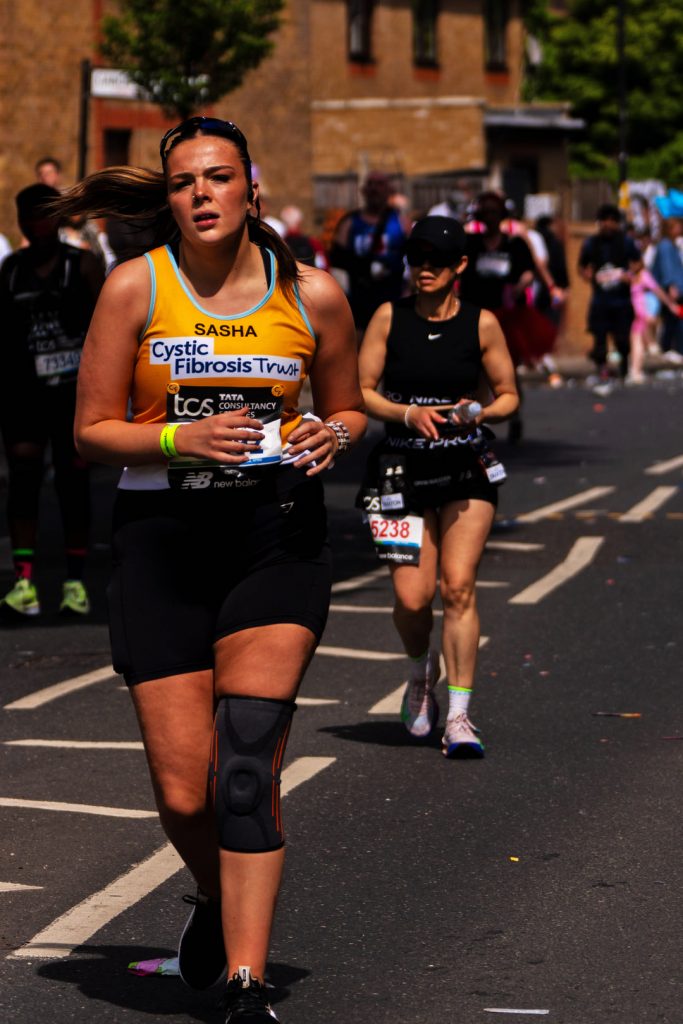
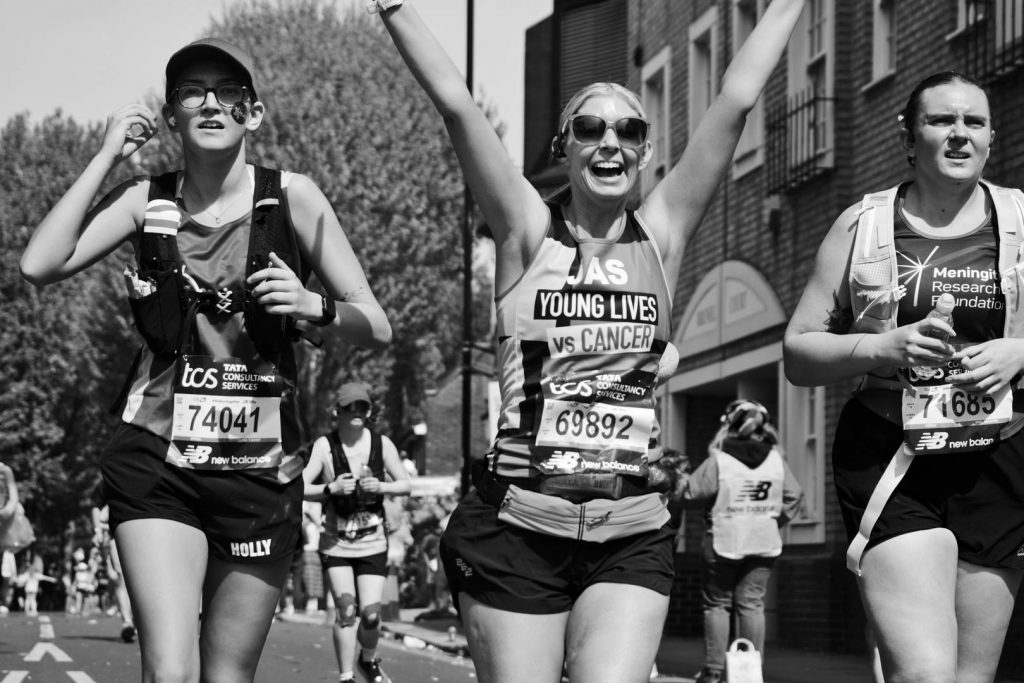
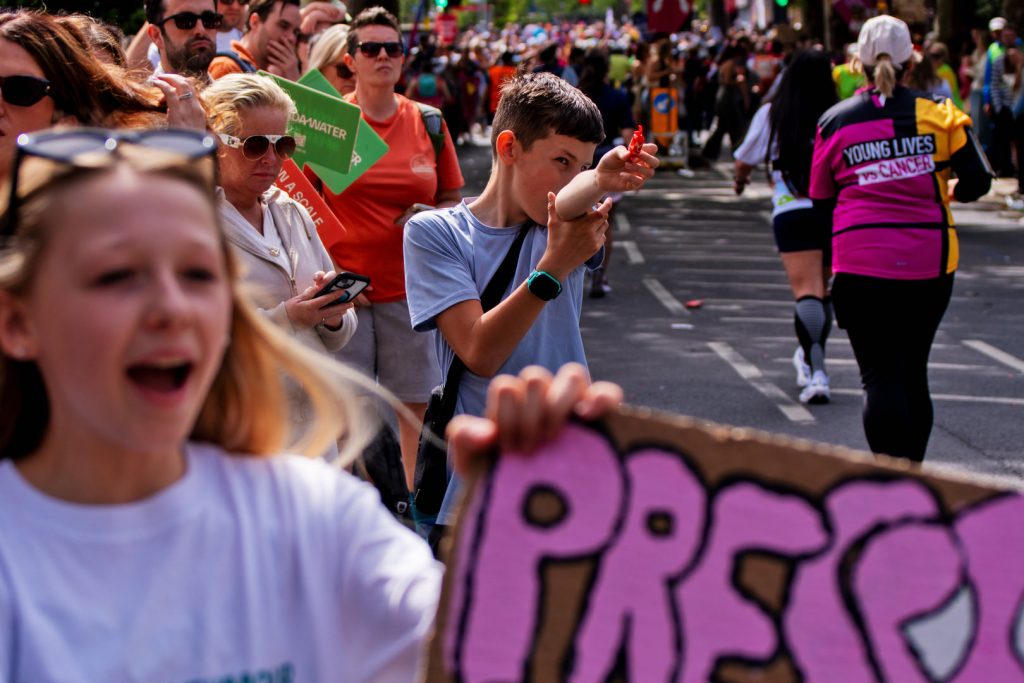
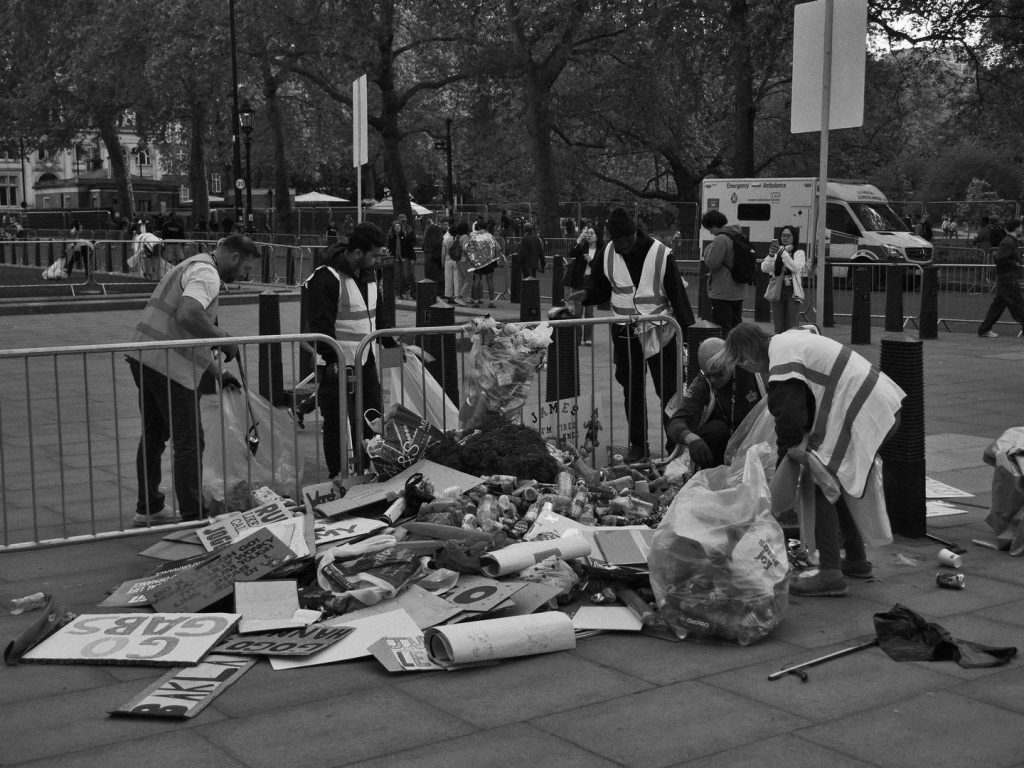
We were on to our next stop around Canary Wharf and it was here the transport problems began. The queue to get into Canada Water station was around 300 meters long, the station seemingly closed. We decided to walk to another station, Bermondsey, I believe, only to find the queues here were long and stationary too. Along the way I was able to grab a few shots of some of the last competitors in the race; behind me the trucks and crews ready to clear the course and reopen it to traffic.
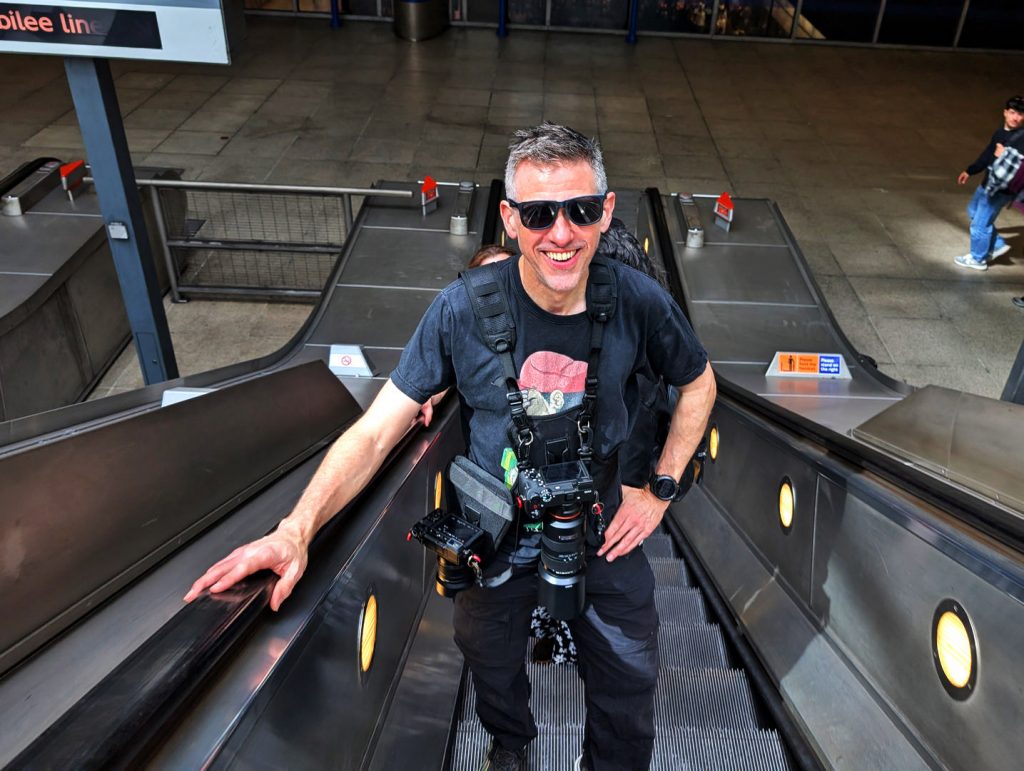
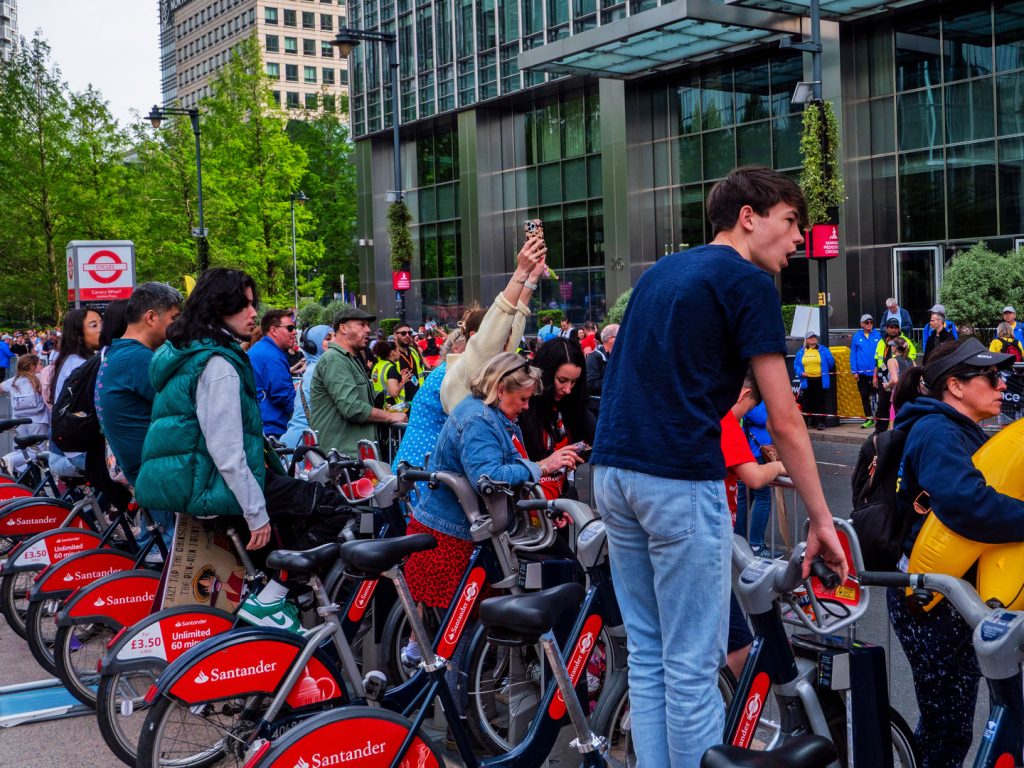
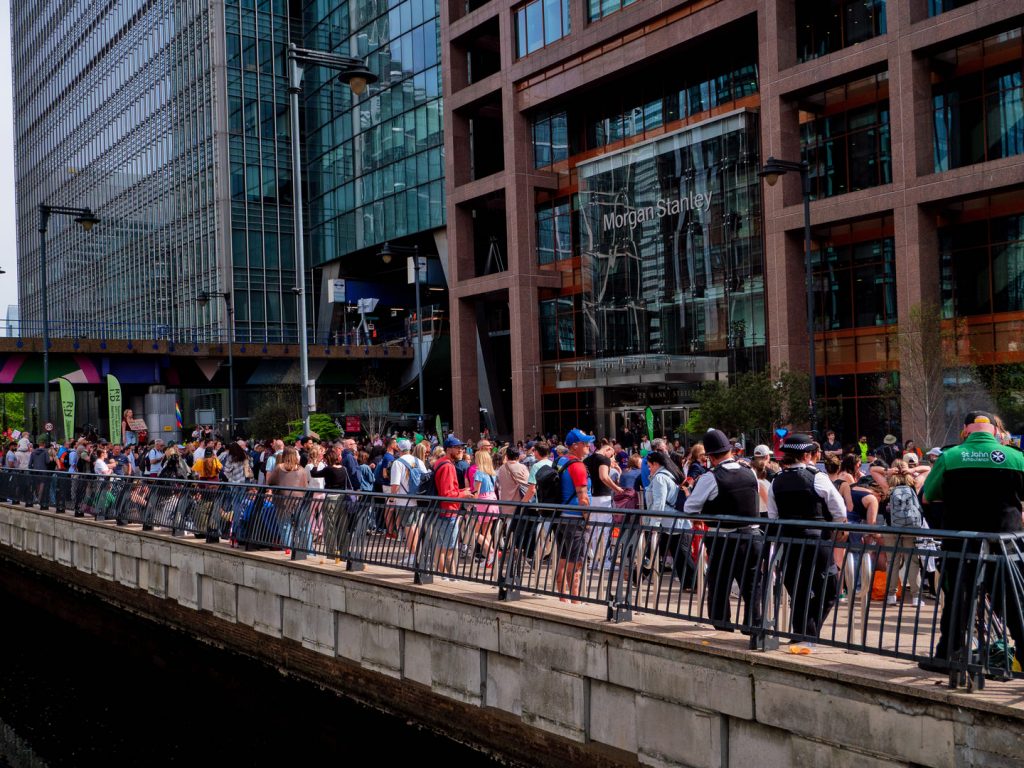
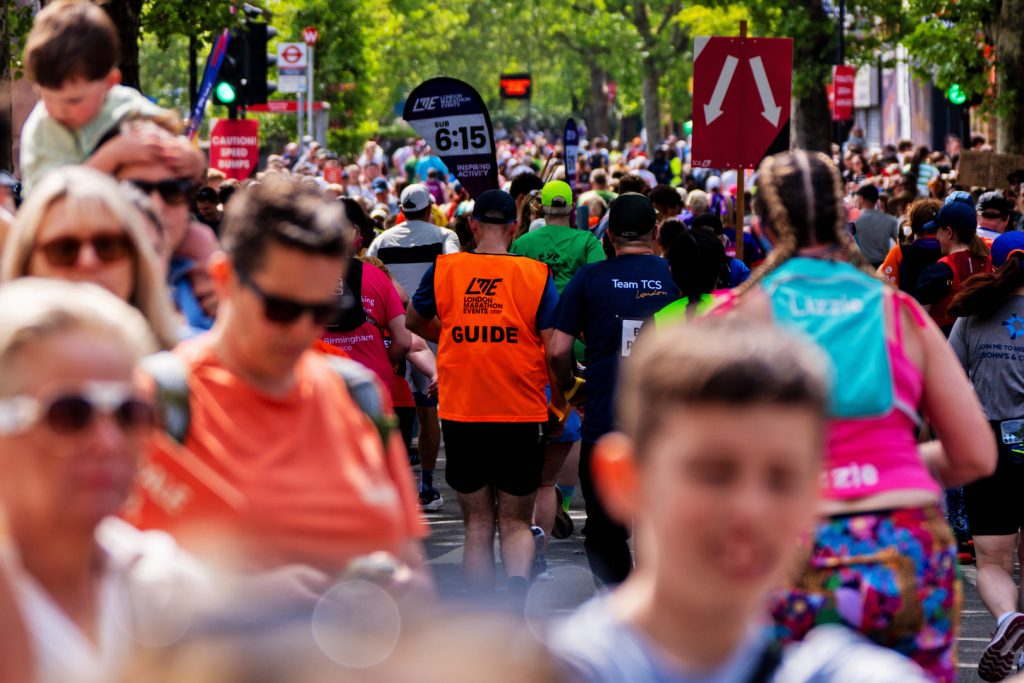
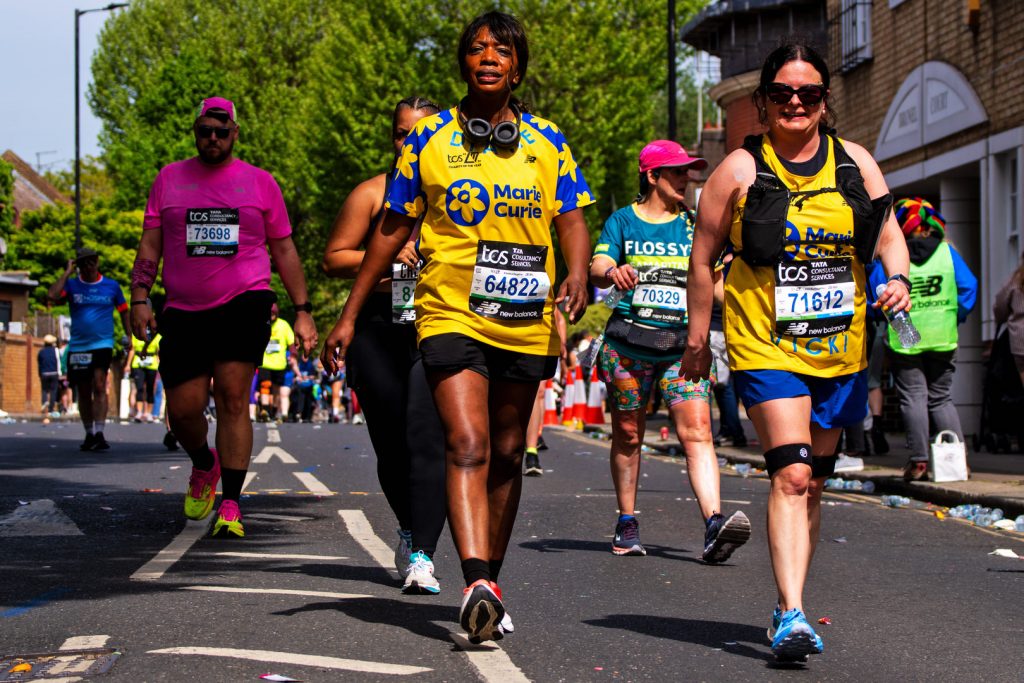
Luckily we didn’t have to wait too long before being able to board a Jubilee Line train that would take us in just five minutes to Canary Wharf. As mentioned earlier, a couple of decades ago this part of the course was a relative oasis of calm and tranquillity spectator wise as numbers were far less than other parts of the course, although by the late 2000s it was starting to certainly get more popular. 2026 and by the station the marathon passes, it was rammed! Crowds were five or six rows deep desperate it seemed to catch a glimpse of the action. Other than taking a few pictures of the crowds it was pointless staying here so we navigated ourselves, thanks again to Dave who used to work in the area, to smoothly navigate us over the bridges and footpaths to West Ferry Road.
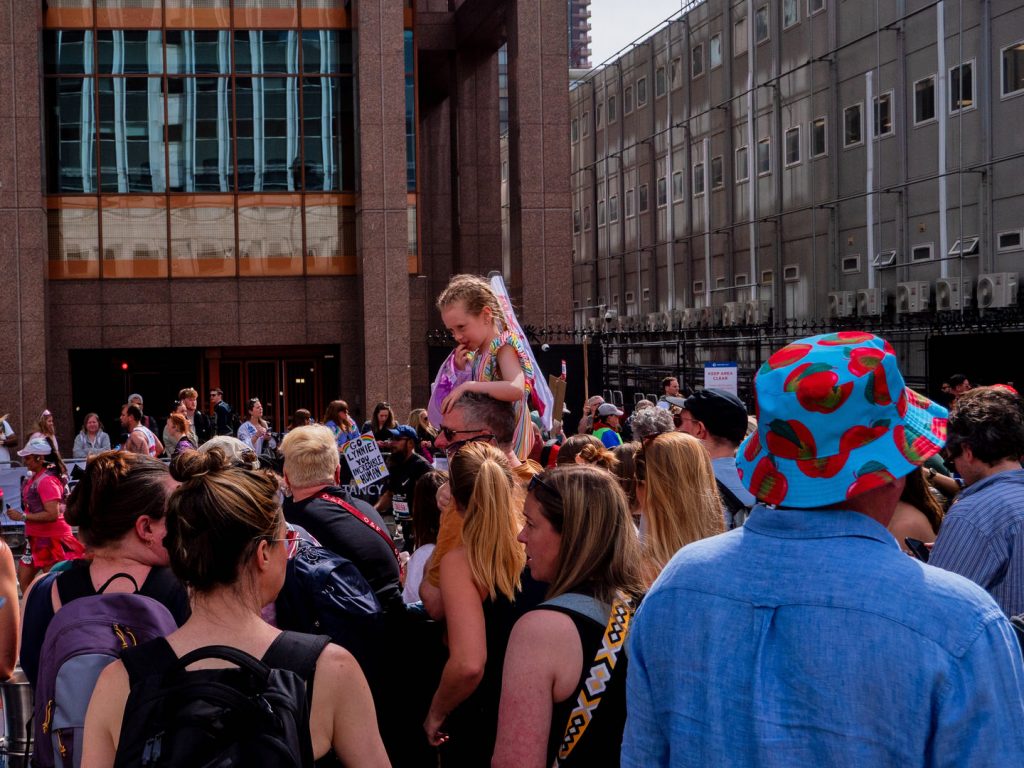
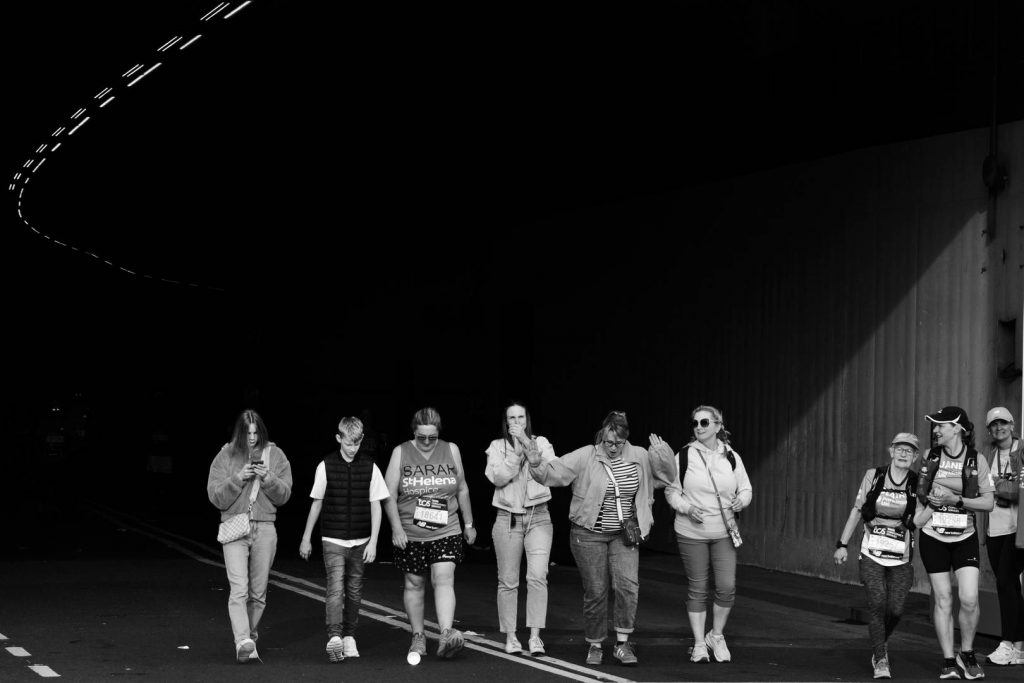
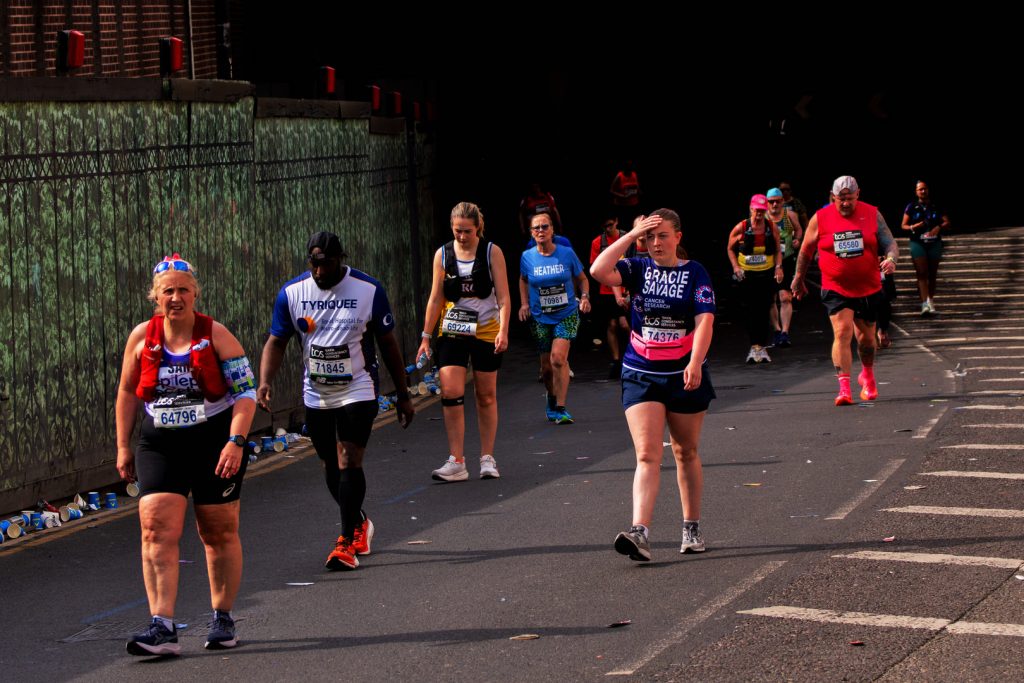
Those who have run the London Marathon will probably know this section well as it has you exiting an underground roundabout that would invariably wreak havoc with your GPS watch as it curved around out of sight of satellites and would likely add or subtract significant distance to your mileage for the first time before the tall buildings around Canary Wharf bouncing the signal would render all GPS stats meaningless.
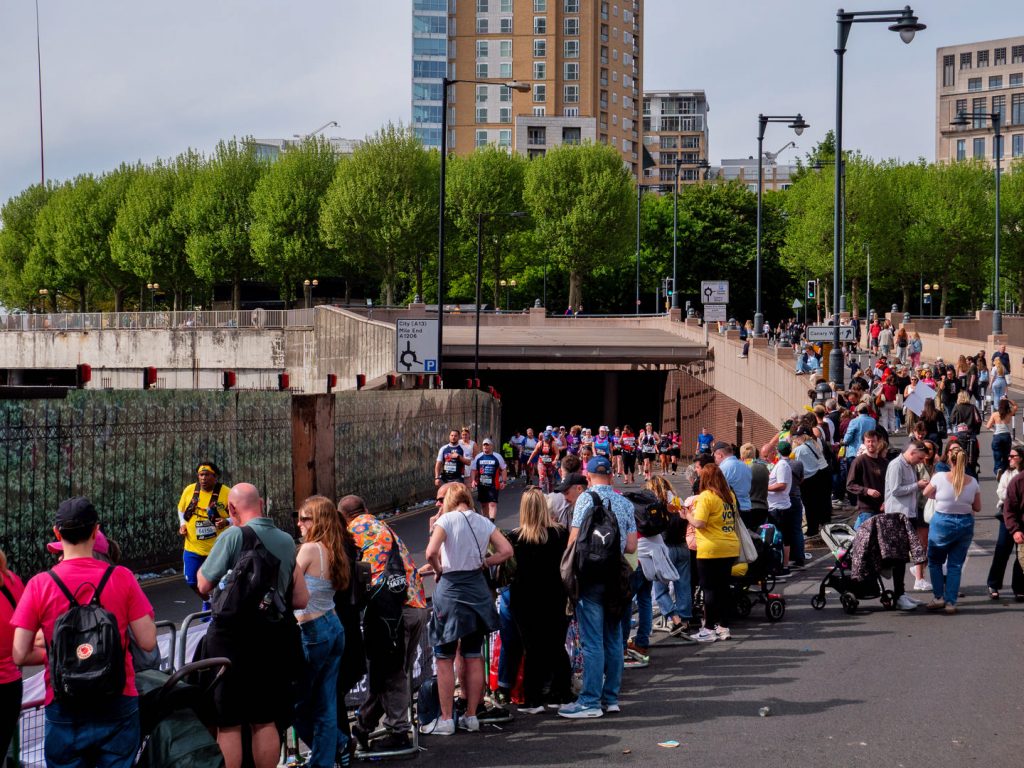
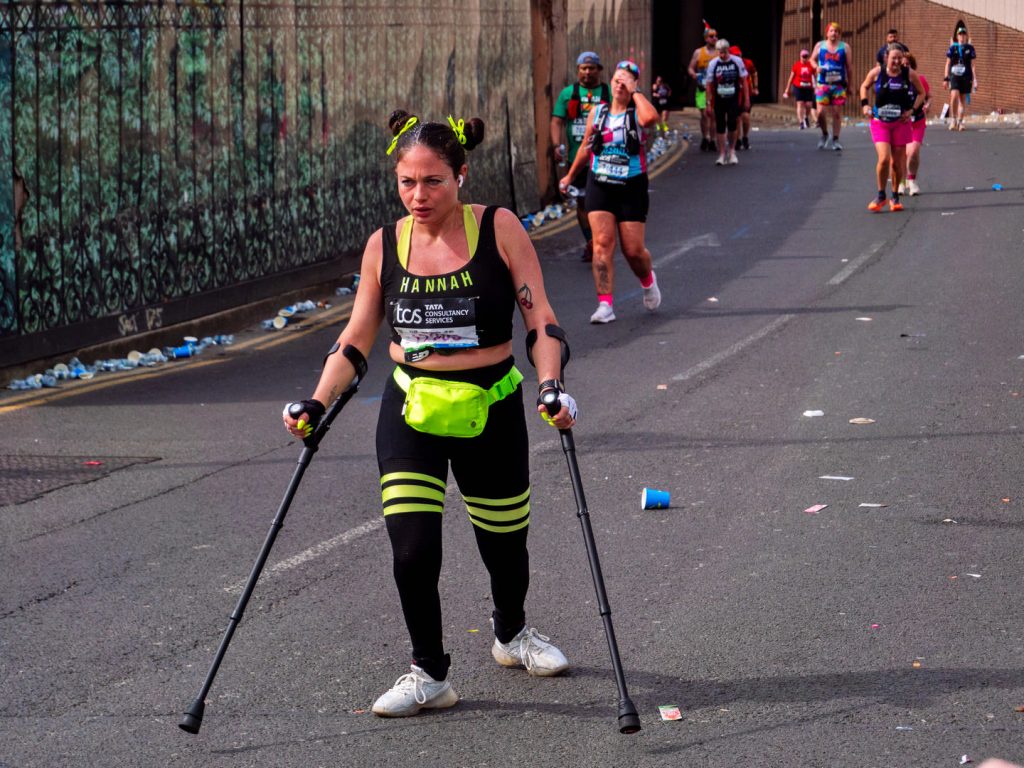
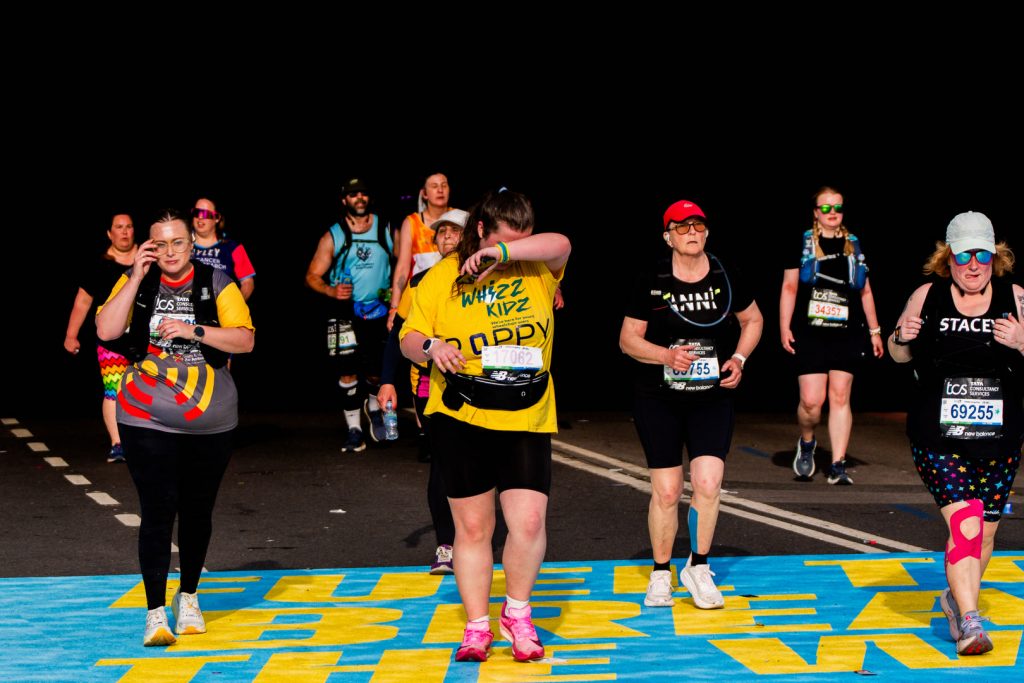
I got some nice images here of runners – mostly walking by this stage – exiting the tunnel and some GV wide angle shots of the tall buildings they had to navigate through next. I think the runners were at around fifteen miles by now and our runner was really starting to suffer – her Plantar Fasciitis really starting to rear its ugly head. Still – she was still clearly enjoying the experience, which is all but impossible not to if you allow yourself to soak up the crowd support (I spent most the race trying to supress it to avoid going too fast too soon – I’d love to do it again without any time aspirations to be able to enjoy the super cool vibes.
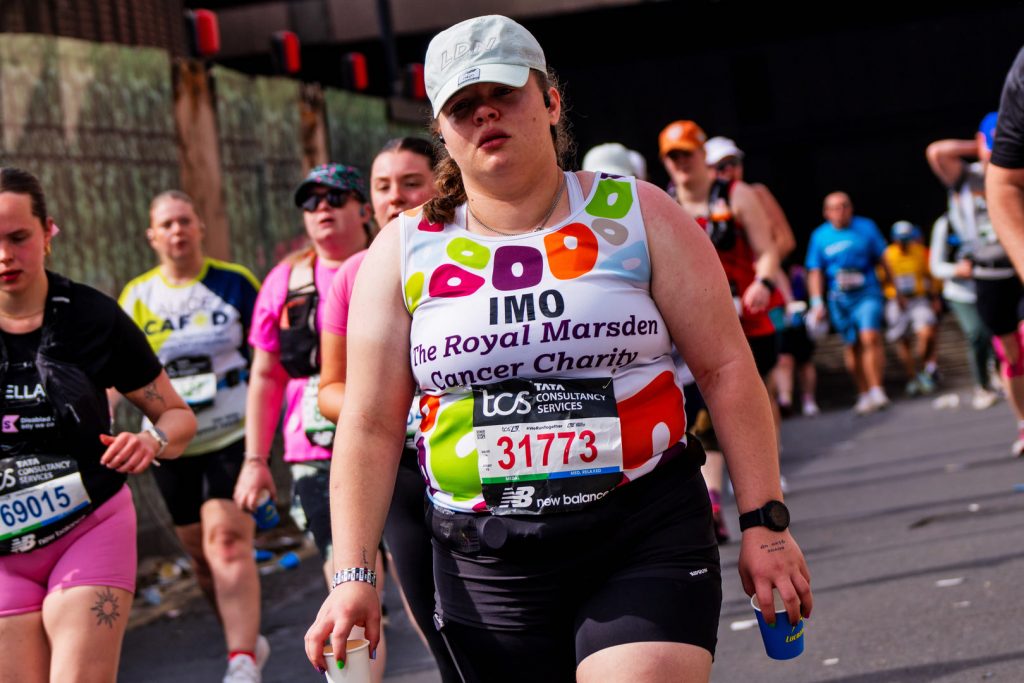
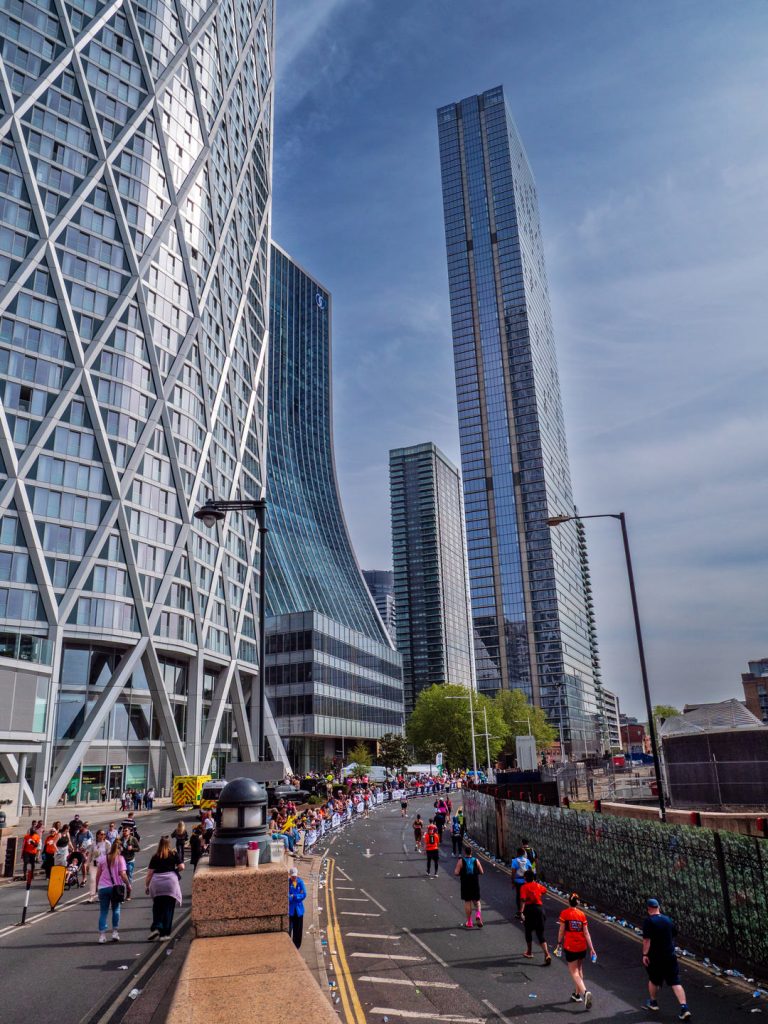
Once our runner had headed off into the distance we were onto our next destination. We avoided returning to Canary Wharf and instead, thanks again to Dave’s expert knowledge of the area were able to jump ahead five or six miles along in the race with around five minutes of walking, taking the opportunity to stop for a sit down by a quiet coffee shop and stock up on supplies at a Tesco Express.
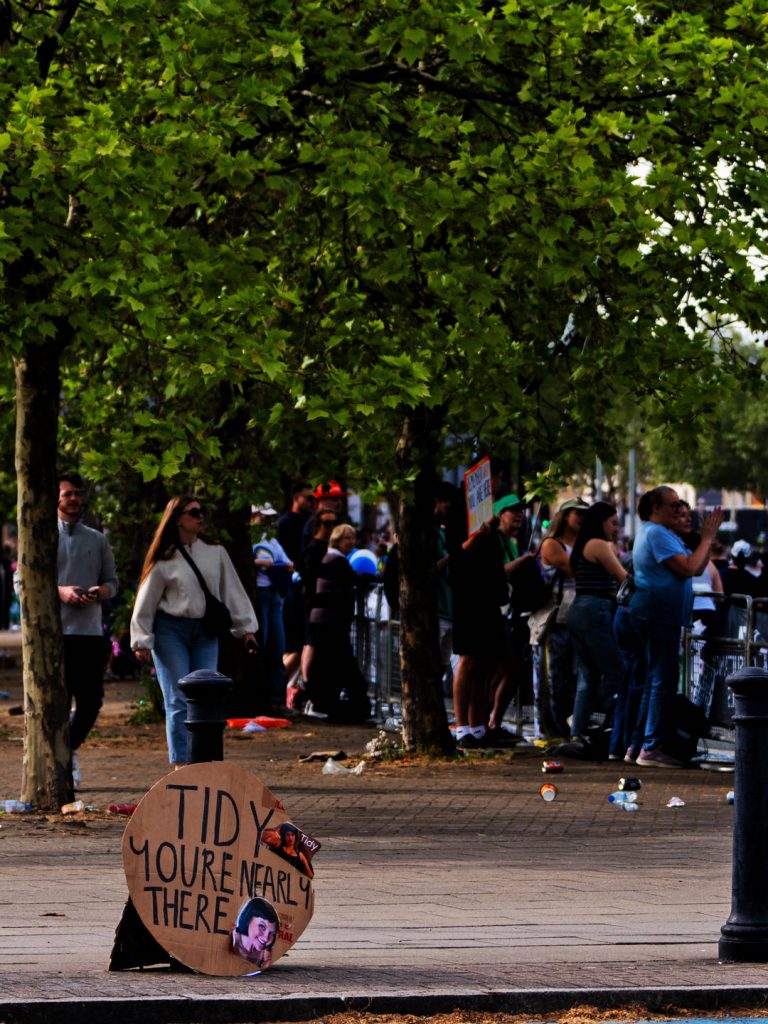
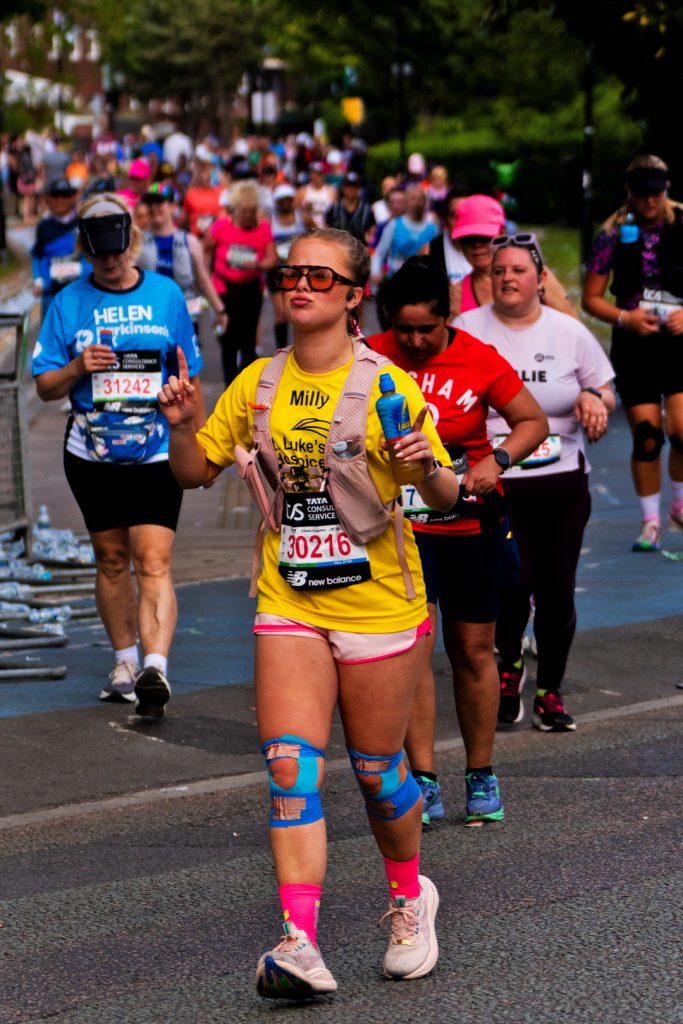
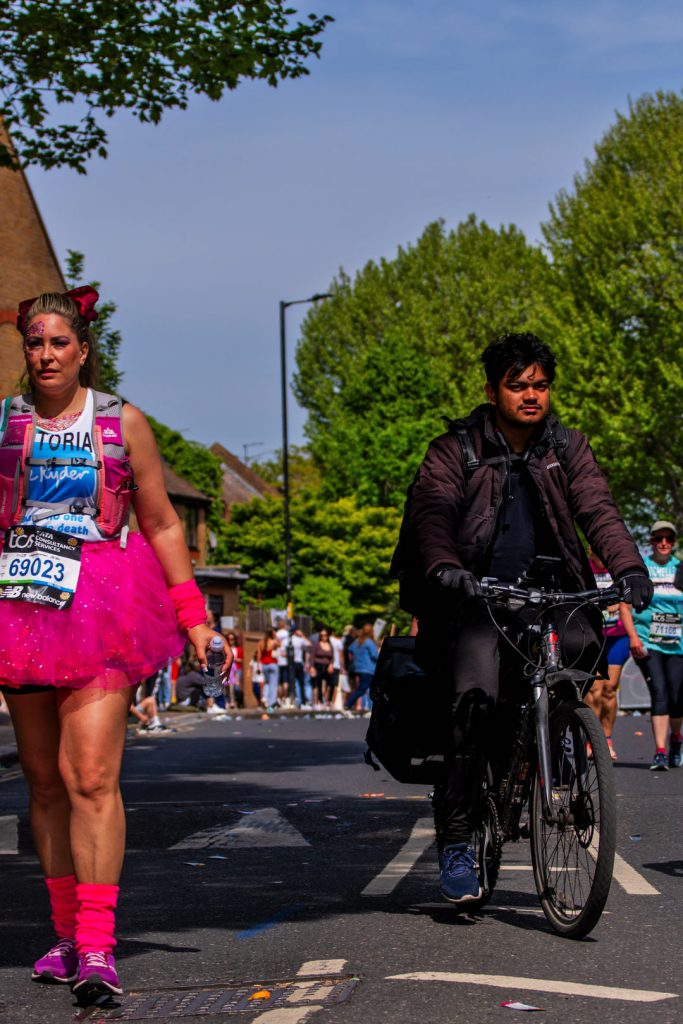
I instantly recognised our next vantage point. After winding your way around in a dizzying trip around the Docklands, the course takes you down Ming Street, a narrow residential road which is closed at the end the runners emerge from to all but cyclists, and spits you out onto the multi lane West India Dock Road. Due to the road being narrow it makes for a pleasing photo showing a stream of runners as far as the eye can see, even though at this stage of the race the runners were able to spread out a little as they ran on the wider roads.
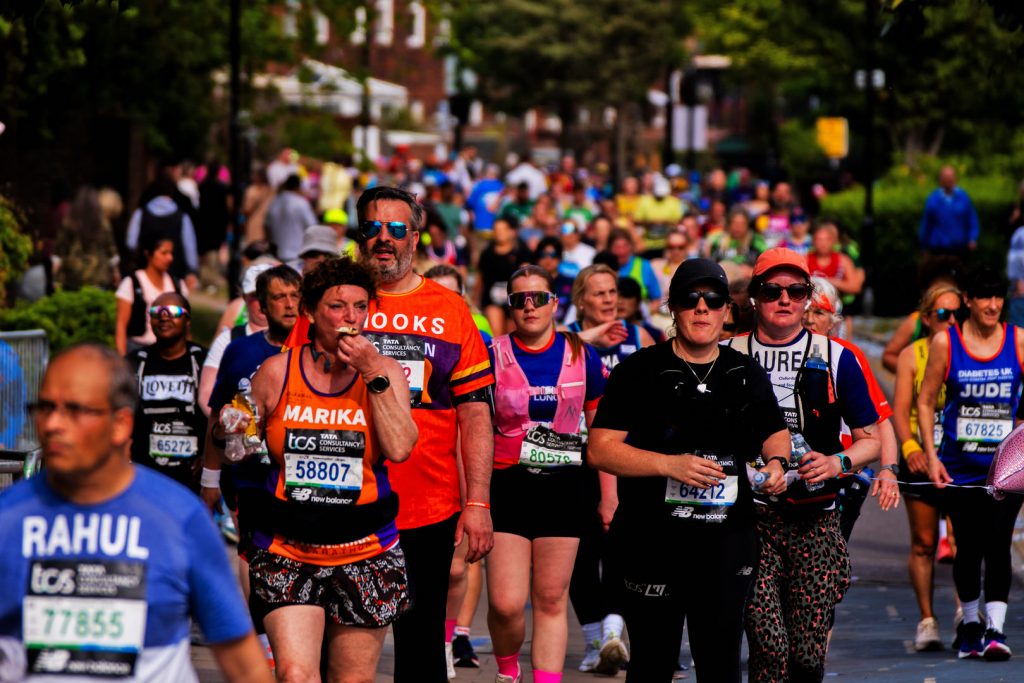
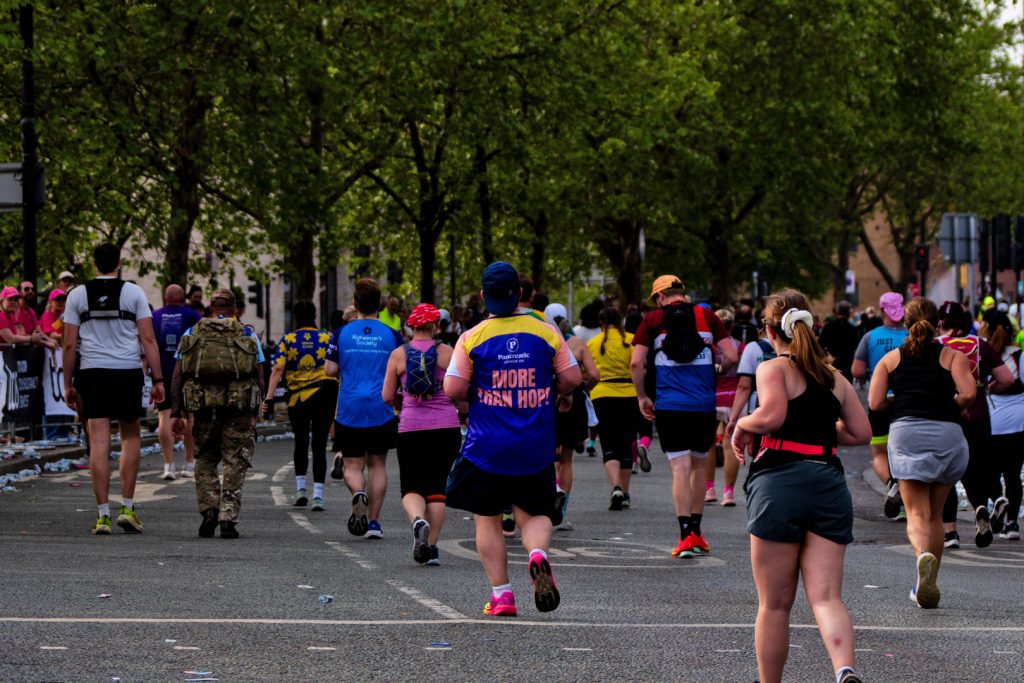
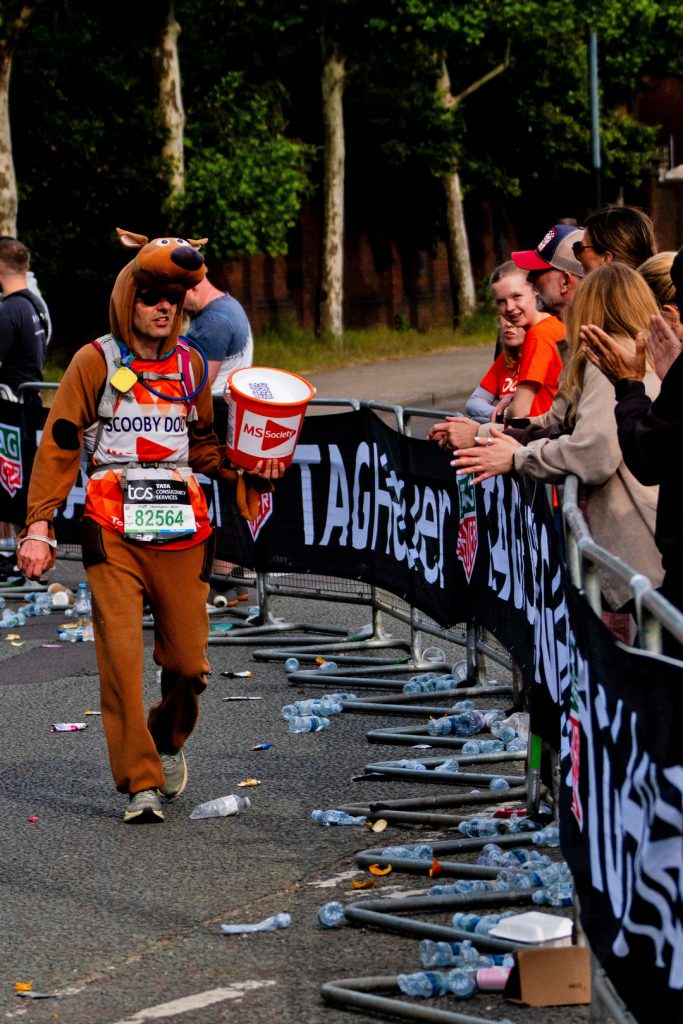
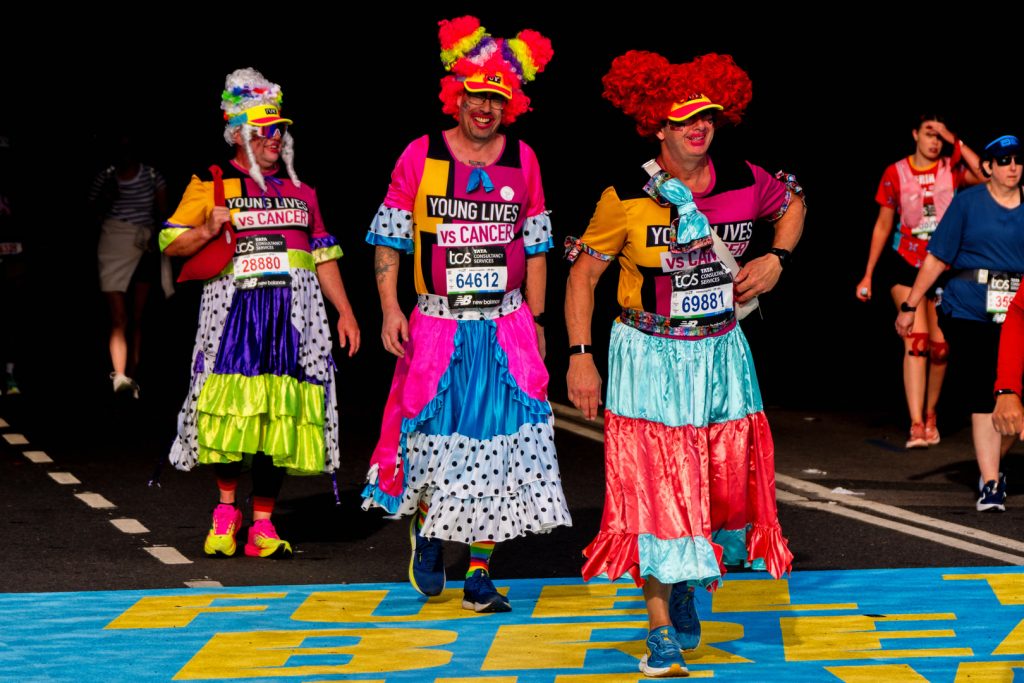
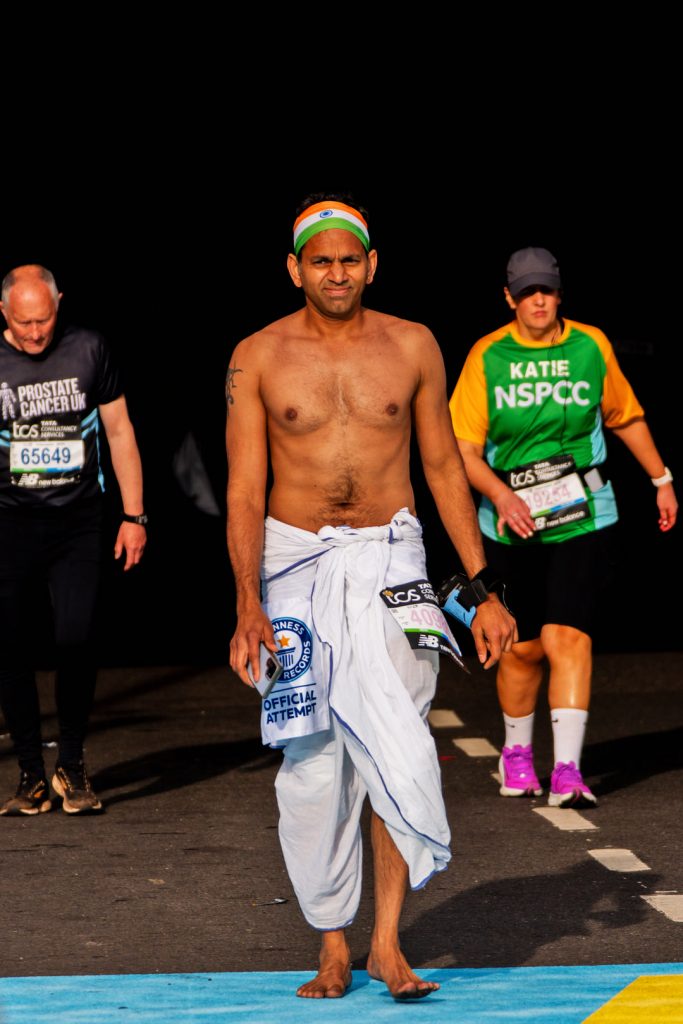
We spent quite a long time here, I was beginning to recognise runners that we had seen earlier – the long suffering fireman; the money collecting Scooby Doo; the barefooted Indian runner trying to set a Guinness World Record for something; the trio of Pantomime Dames; and, of course, our runner and her Sister. Her chat to us here was more positive – it had gone nearly 5pm and temperatures were beginning to cool; the breeze picking up a touch, the dodgy foot not quite so dodgy. With twenty miles in the bag and the marathon just beginning, finishing was no longer in question, what time it would take was now the topic of discussion.
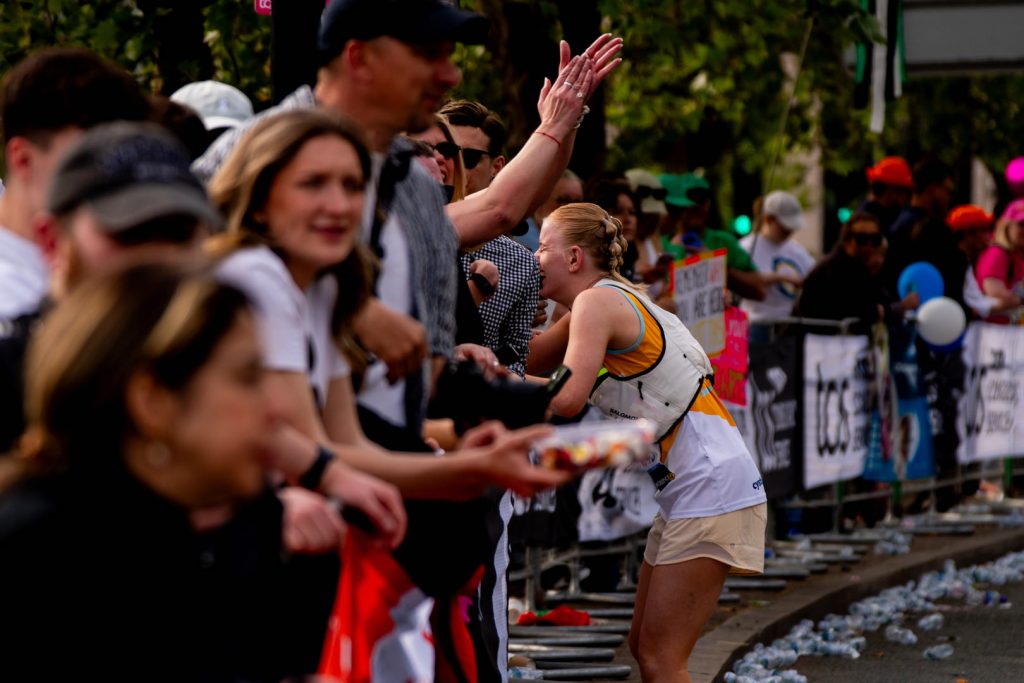
We were on the trains once more; at least I think we were – my memory is now a little vague. I think we got the train to Bank and then walked to Monument with the hope of getting a tube to somewhere near the finish. However the queues to get in the station were huge and not moving. It transpired that Westminster Station had been closed and presumably this was causing temporary closures of stations to prevent overcrowding on platforms. A quick look at the map showed that we were a stone’s throw away from getting back onto the course at 23 miles. I knew from previous experience of spectating and running that you could walk alongside the course all the way along the river to Big Ben which is less than a mile from the finish.
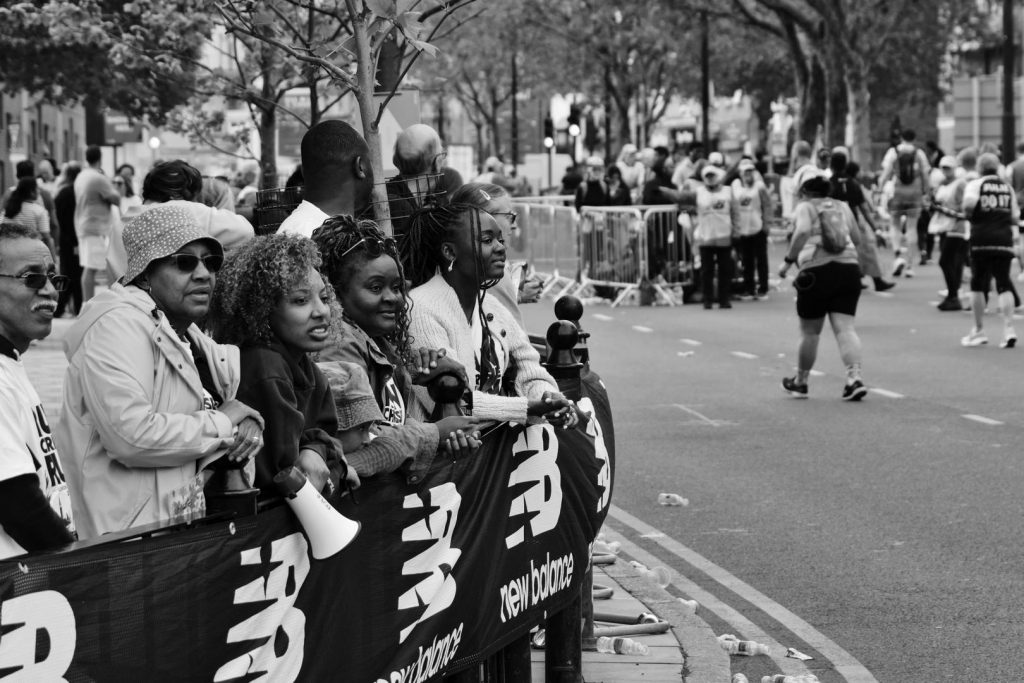
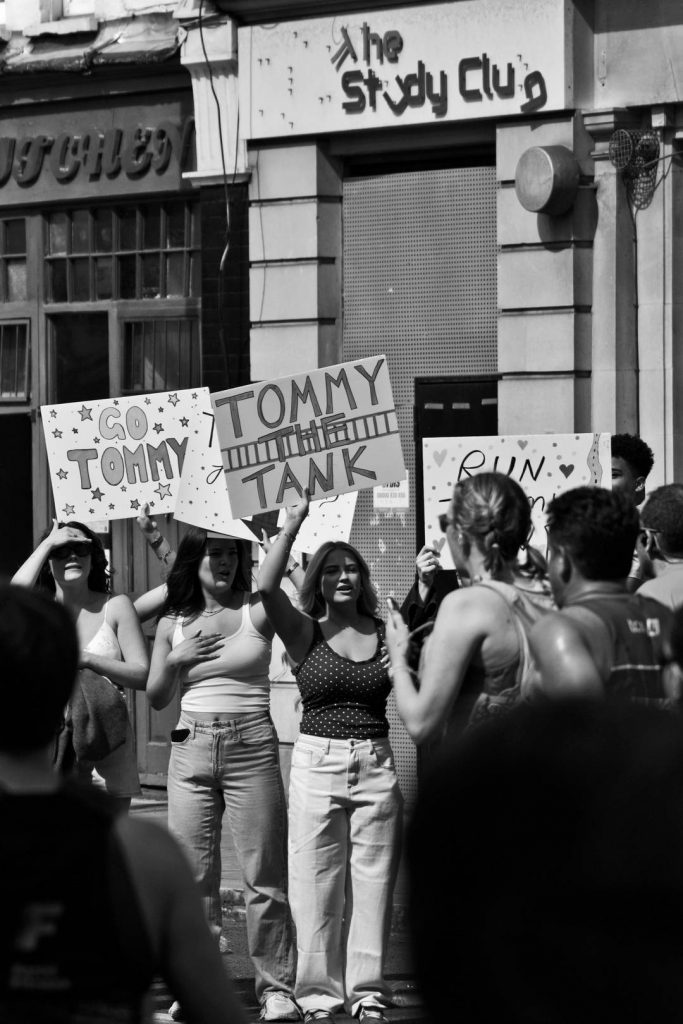
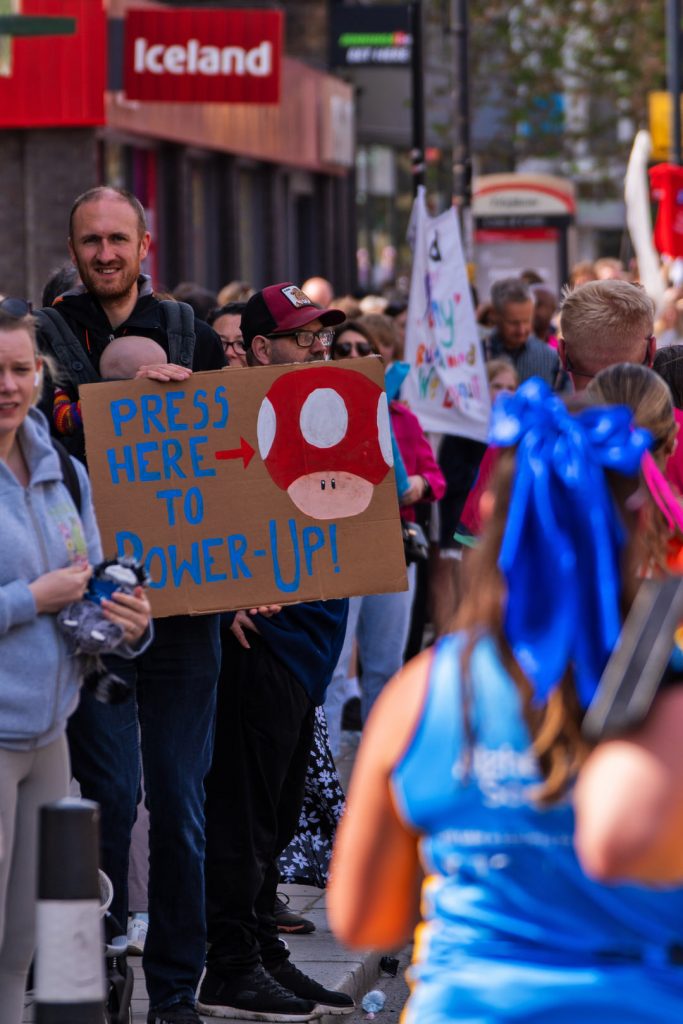
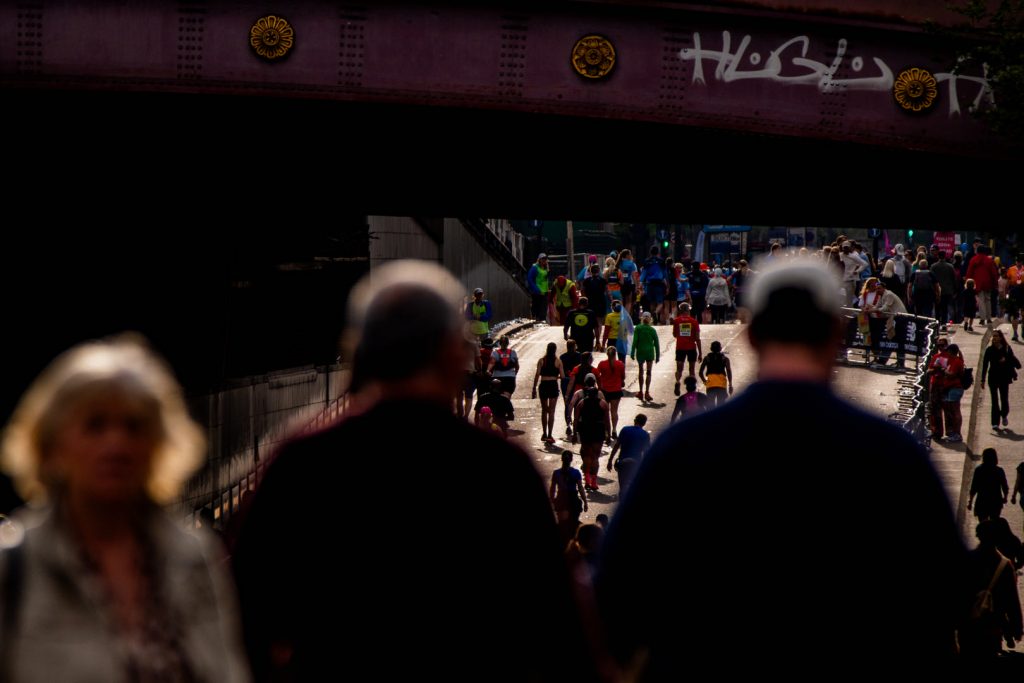
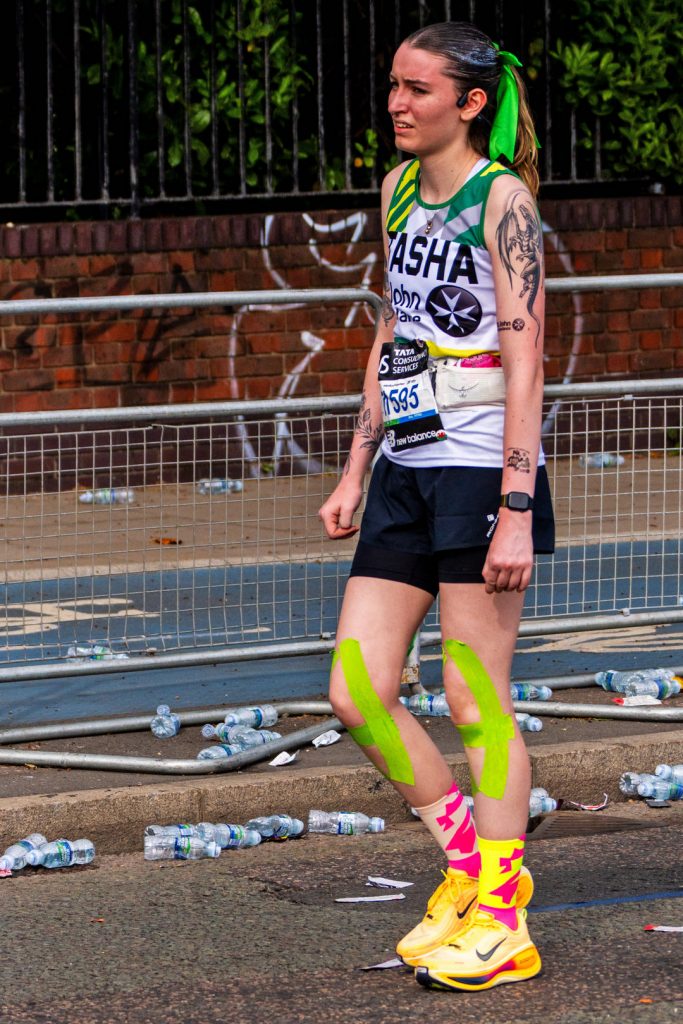
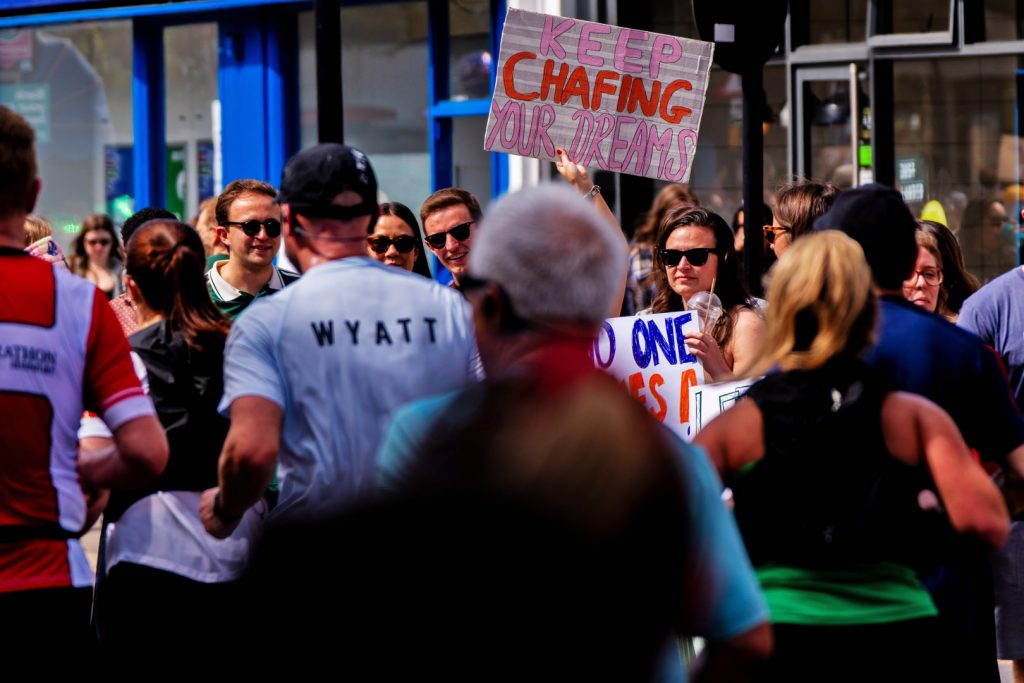
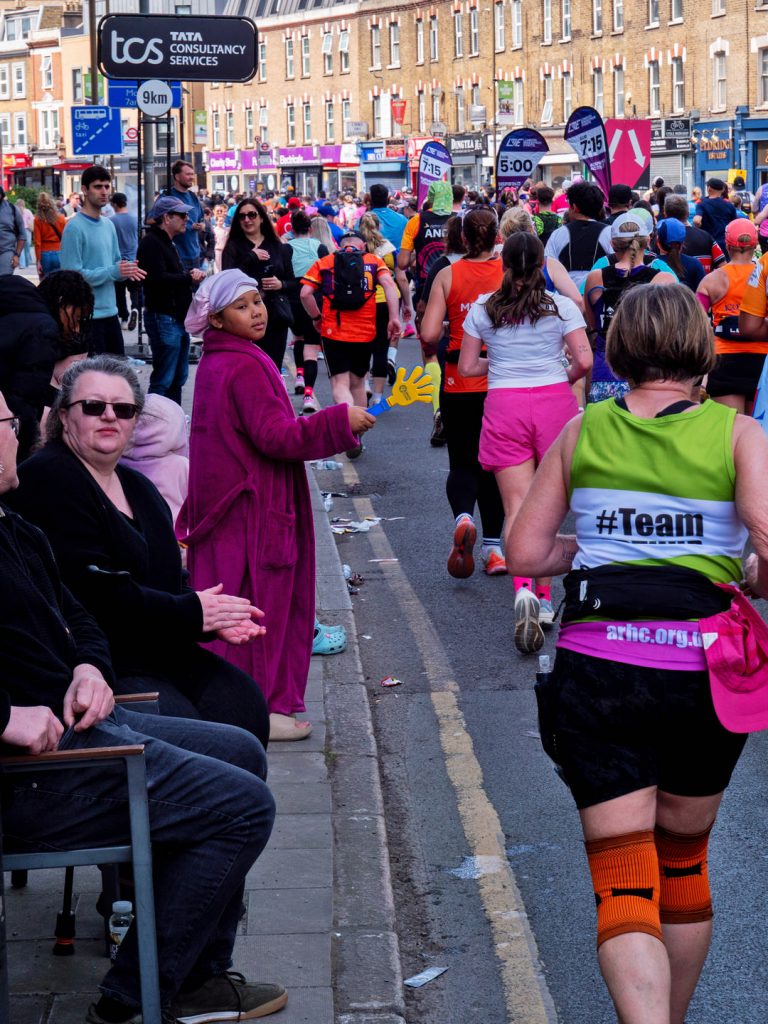
A three mile walk seemed like nothing when compared to the efforts of all those around us. It, of course, meant, I had opportunities for more photos, including my favourite runners’ reaction to the many thousands of handmade encouragement signs along the entirety of the route. The Lucozade station (sticky floors recollection!) just before the long underpass at Blackfriars had me excitedly heading to the exit where I knew the official media photographers liked to congregate.
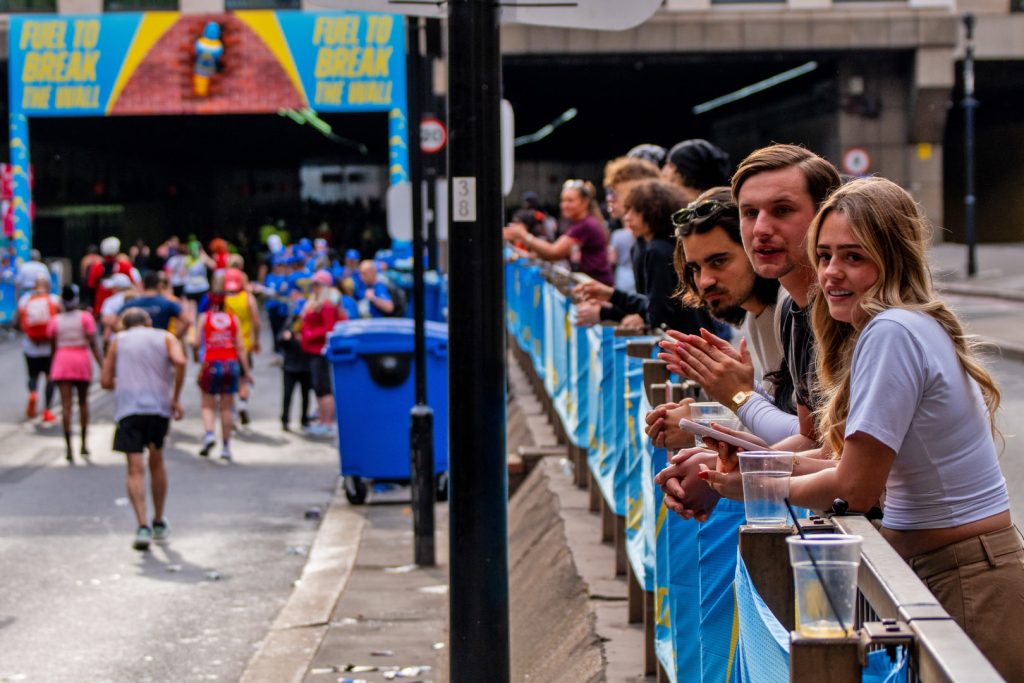
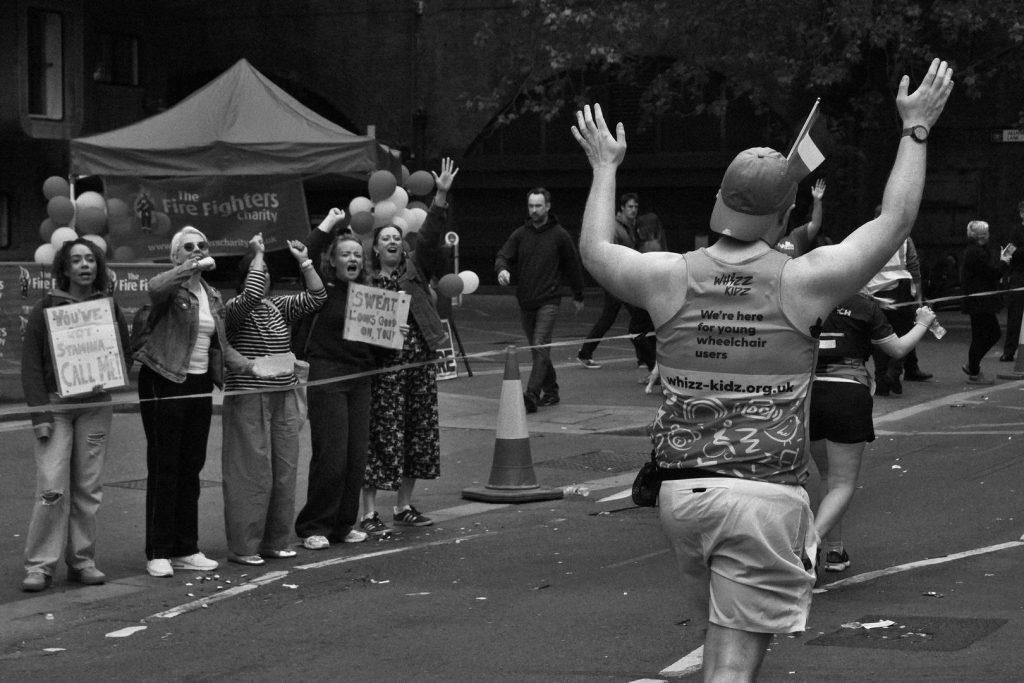
Sure enough there was a photographer here taking pictures of the runners exiting the dark tunnel and into the bright light, which by now was slowly setting in the sky. I didn’t have the luxury of the dead head on angle the official photographer had (this section is barriered off) but I was pleased with the results. Once again unfortunately our supported runner was on the wrong side of the road for a direct shot of her leaving her the tunnel, but it was apt that the runner in front of her was wearing the same charity colours for Mind.
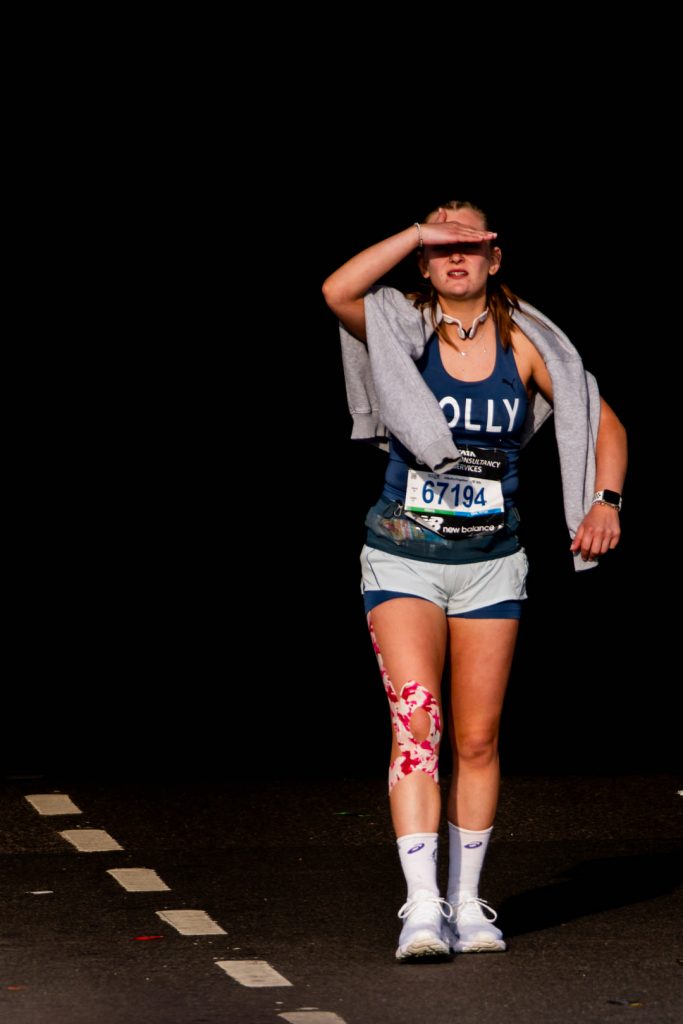
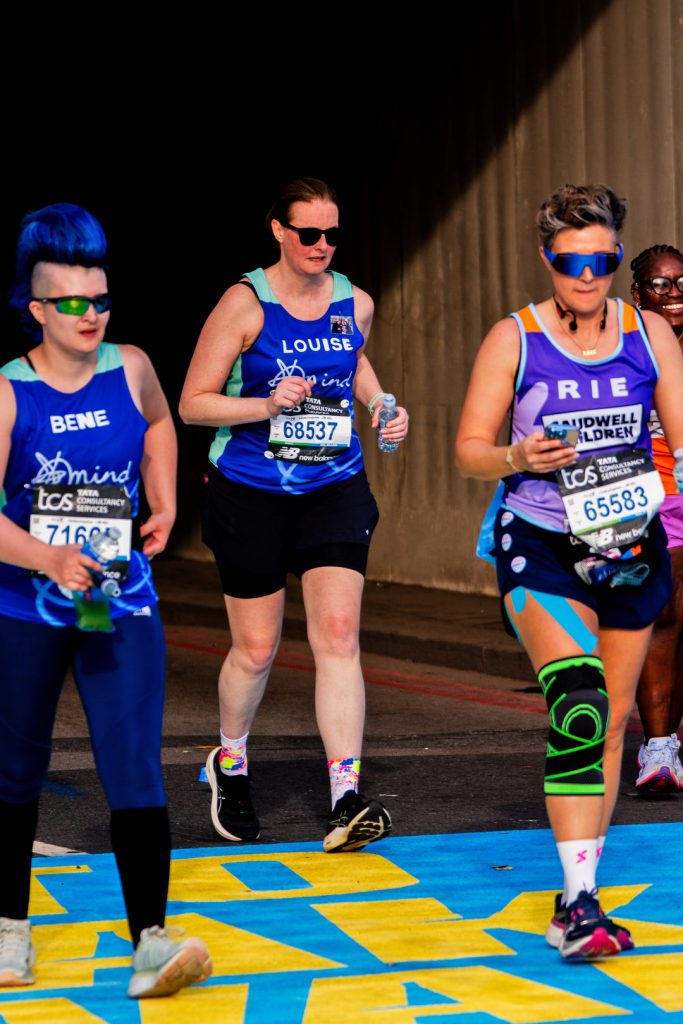
The stop to chat was made more poignant by us, by pure chance, catching up with our runners daughter and son, enabling me to get an earlier than anticipated family celebration picture. For a minute it looked like the kids would join our runner for the final two miles – there were plenty of other spectators by this point who had become unofficial participants alongside their friends and family – but in the end it was not to be.
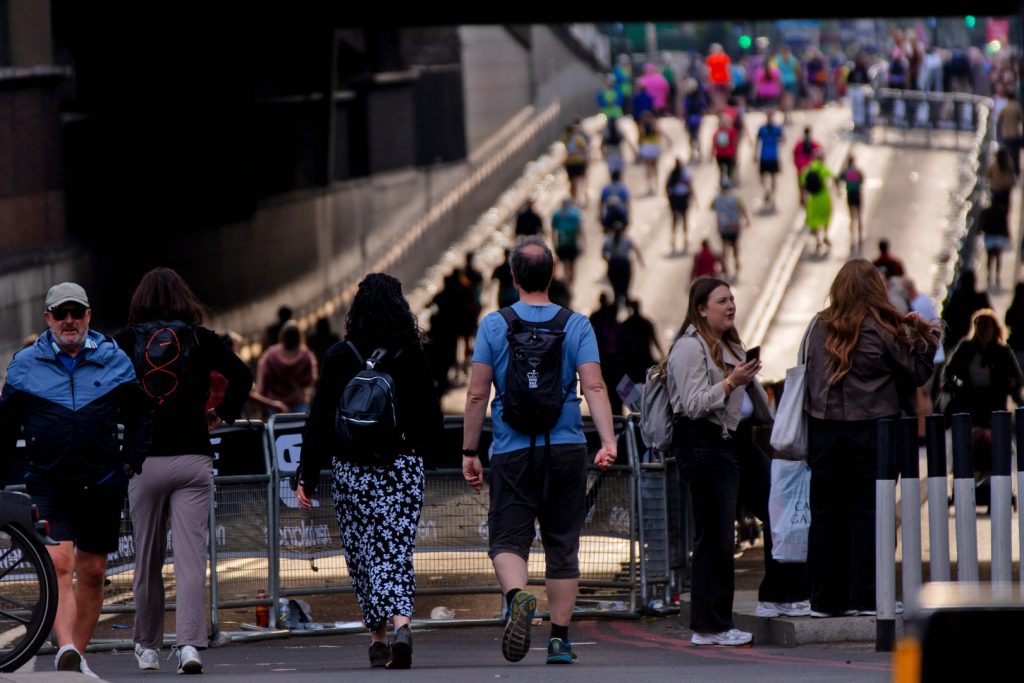
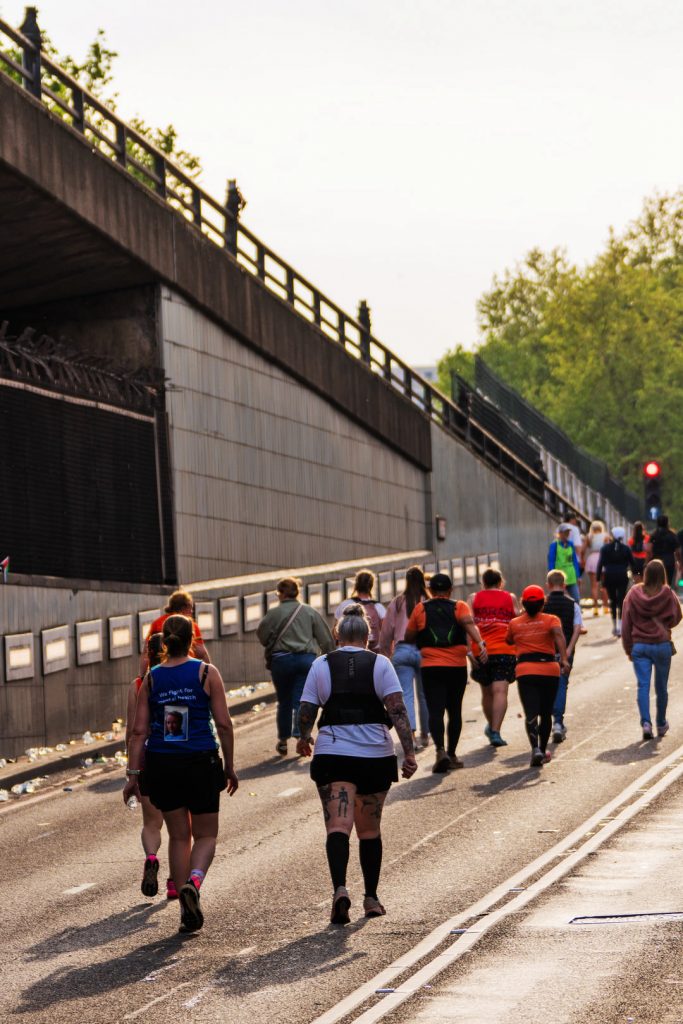
The vest came into its own for the next mile or so as I knew that if I could get ahead of them I could get the classic shot of them passing Big Ben in the final mile of the race. With the vest I was able to jog on relatively easily, only the hoards of pedestrians around me slowing me down. It dawned on me however that over the past hour or so taking hundreds of pictures I had totally forgotten to check the battery status of my cameras. The Sony had completely exhausted itself and wouldn’t switch on. The Panasonic was down to the last quarter, it not giving me the luxury of knowing the exact percentage. It could be at 24%; it could be at 1%. I had left the spare batteries with the wife and there was no time to turn back now. I had to risk it.
I found my spot to ensure that the whole of Big Ben would be in the frame – this made easy by finding the official photographer who I knew would be taking the same picture. I took one shot of another runner to make sure the settings were correct, then waited for our runner to arrive. As it happened it was only a minute or so later – which was good for her and good for my battery! Once again she had the misfortune of having another runner just in front of her, but I was able to get one shot of her being the subject of the image, albeit with her being in the lower most right hand side of the frame!
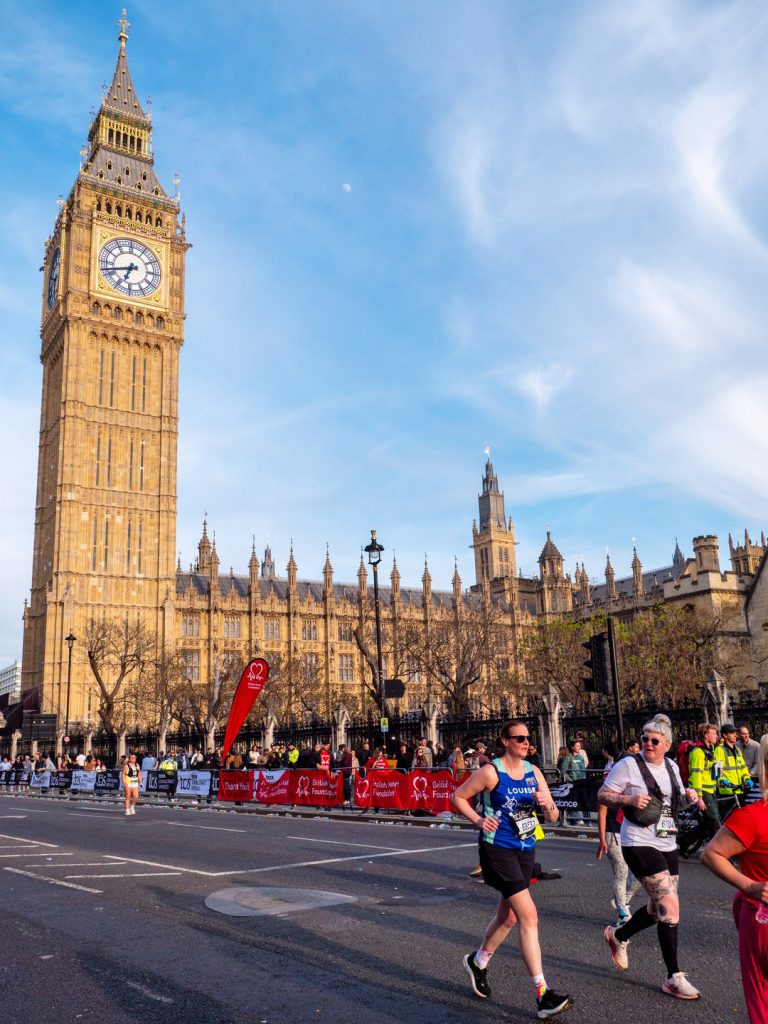
Shot taken, camera off, I headed back to my wife and friends to make our way to the repatriation area on Birdcage Walk (It is impossible to get a picture at the finish unless you get a ticket for the Grandstand and stay all day there). We hung around a while, staying a respectable distance from her family so they could enjoy the inevitable initial emotions at the finish before we would congratulate her on her superb achievement.
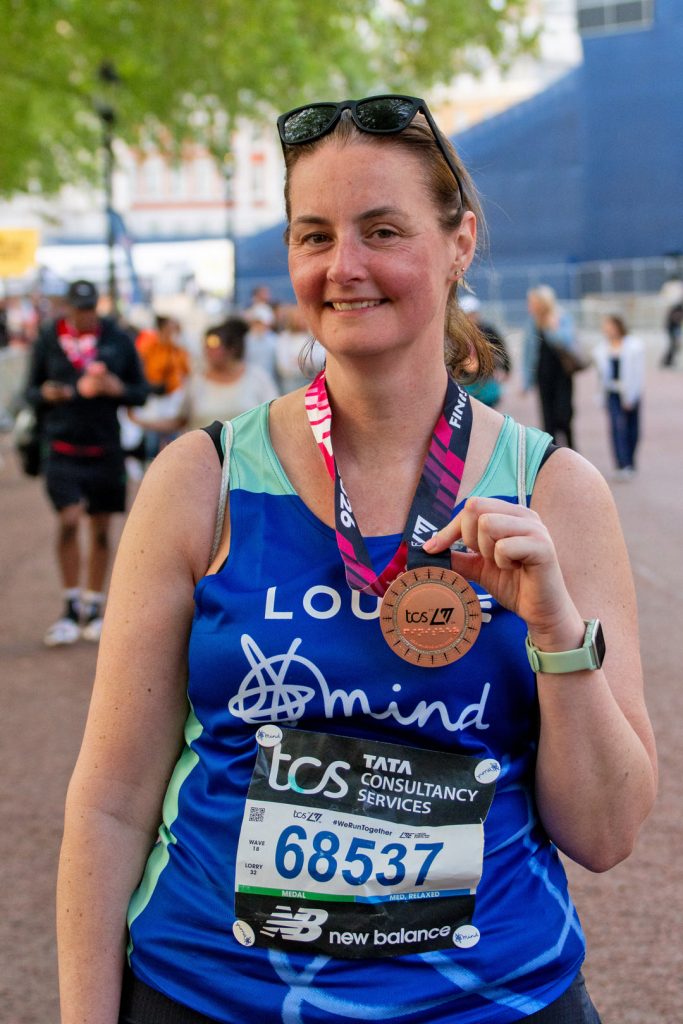
She finished in around seven hours twenty minutes. As one of the last waves to start and one of the slower finishers, it meant that she was one of the last to enjoy the experience of running the proper course all the way to the finish. Finishers not long after are diverted away from Buckingham Palace and through St James Park as we found out as we tried to get away from the finish via Green Park once we had said our congratulations and goodbyes.
It was not as hectic getting back home as it was making it around London. The Leeds fans were not too rowdy having lost 1-0 in the football, congregating en masse in Kings Cross waiting for a fast train home. We found somewhere to get sandwiches for our dinner, before catching the train to Stevenage and then driving back home, getting home not much before 11pm.
A very enjoyable, very long day. Some of the things I learnt from the experience:
- The camera vest was brilliant. I’m not sure about its longevity being so cheap but aside from needing an adjustment or two during the day – probably caused by me running with the cameras attached, something it is likely not designed to do, it worked flawlessly and far better than expected. I will certainly be using it again whenever I am shooting an event with two cameras and a busy event with one camera.
- A marathon is more fun nearer the back than the front. When I ran marathons chasing times under three hours, for the most part it was a serious affair – no time to stop and chat with spectators, take in the atmosphere, soak up the experience. I think it’s more painful judging by the expressions on many of the runners however!
- The A6700 is a fine camera but it is not ergonomically the best. By the end of the day holding it with a large lens was uncomfortable and my hand was beginning to ache. I think this is mostly due to it just being a touch too small – the little finger hanging off the bottom. It is now apparent to me why so many YouTube videos giving hints and tips for the camera that I explored when I bought the camera recommended getting some kind of rig or base plate to improve the ergonomics. It’s a big shame that there is no vertical grip available for this camera, as it would surely solve this issue and give the additional benefit of longer battery life.
- A micro 4/3s camera is brilliant for shooting general view shots of situations where you want pretty much everything in focus. This is because a shot taken at around F4 is the equivalent of around F8 on a full frame camera, but with the benefit of extra the extra light. I barely had a shot on the Panasonic that wasn’t useable.
- A small micro 4/3s camera has terrible battery life. Take plenty of spares and a charger if you plan on shooting all day!
- The Sony 70-300mm is a really nice lens available at an affordable price second hand and a great investment, especially if you have an appropriate adapter for the mirrorless cameras. If I was going to be doing this sort of thing full time I would look to invest in a lens that was built for mirrorless to fully take advantage of the blazingly quick and accurate AF on the Sony A6700. It is perfectly useable with this combination, but I think my hit would have been around 50% better with a more modern lens.
- I do recommend going down to spectate / photograph the London Marathon – especially if you have runner(s) to support. It is a life affirming experience which shows London in its best light – perhaps artificial, but genuinely I did not see a single soul who wasn’t good spirited, kind hearted, and helpful.
- Unless you are willing to get to your spot super early to ensure a prime position, avoid the most popular spots around the course to spectate / take photographs. There isn’t much to see or photograph when the crowds are five or more rows deep. Although seemingly more populated year on year, there are still sections that are quiet enough to gain a good position to take decent photographs.
I’m very glad I went down to watch and photograph the London Marathon. I learnt a lot about my cameras and was generally pleased with the results I got. There is definitely room for improvement, but it is definitely something I will be looking to do again.
Leave a Reply